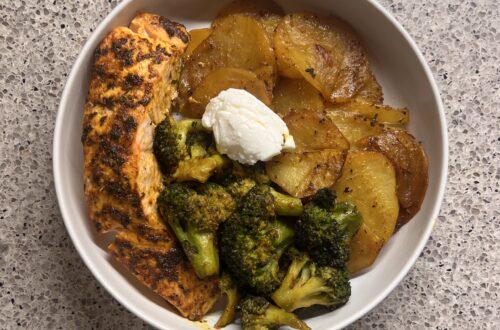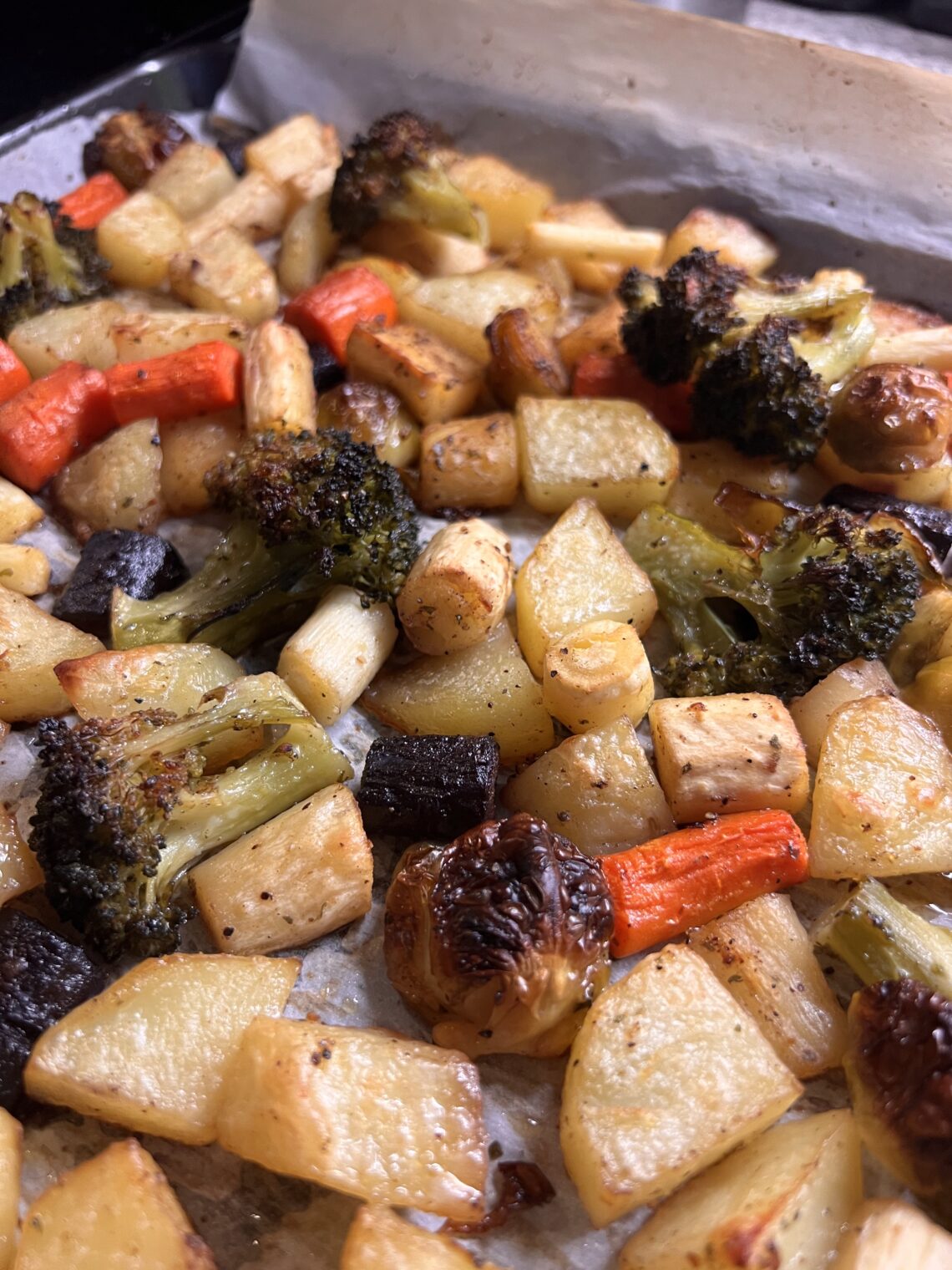
Prepping vegetables has to be one of my least favourite cooking chores. Washing, peeling, chopping, and seasoning just absolutely bore me to tears, no matter how much I love the outcome – tender, flavourful, warm little nuggets of goodness. Thankfully, roasted veggies prep wonderfully and are just as easily brought back to life after a little stint in a hot oven or pan. Not to mention they’re endlessly customizable, and can be seasoned to match any flavour profile. With 2025 behind us and many of us focusing on healthier eating habits, these easy roasted veggies will make adding goodness to your meals easy-peasy.
Having prepped, cooked, delicious veggies on hand can make a world of difference for working professionals, busy families, or even just people who prefer to not spend hours in the kitchen everyday cooking. Most adults are not eating enough vegetables every day, according to studies conducted by governments and universities worldwide. We all grew up hearing that we needed to get our “5 a day” in, but what exactly these “5” were was left up to our imagination. The truth is, 5 servings of a fruit like an apple or banana or a vegetable like a carrot or potato is easy enough to measure, but when it comes to things like grapes, or spinach, or broccoli, what constitutes a serving exactly? The answer is it depends. Most people agree that 1/2 a cup of grapes counts as a single serving, while a full cup of spinach equals one serving. It can be difficult to track all the different serving amounts and how much of each you’re eating per day, and for this reason, the old rule of “5 a day” has been widely discarded in favour of new guidance stating that adults should be getting in about 2-3 cups of varied fruits and veg per day.
Watching our intake of fruits and vegetables is more important than ever, especially with diseases like IBS and colon cancer becoming more prevalent in younger populations. Fibre is seriously lacking in the diets of young adults which contributes not only to the aforementioned diseases but also to bloating, weight gain, high cholesterol and stress on the heart. And while there are fibre supplements widely available on the market these days, the most optimal way to get your fibre intake up will almost always be to increase the amount of whole, high-fibre foods in your diet.
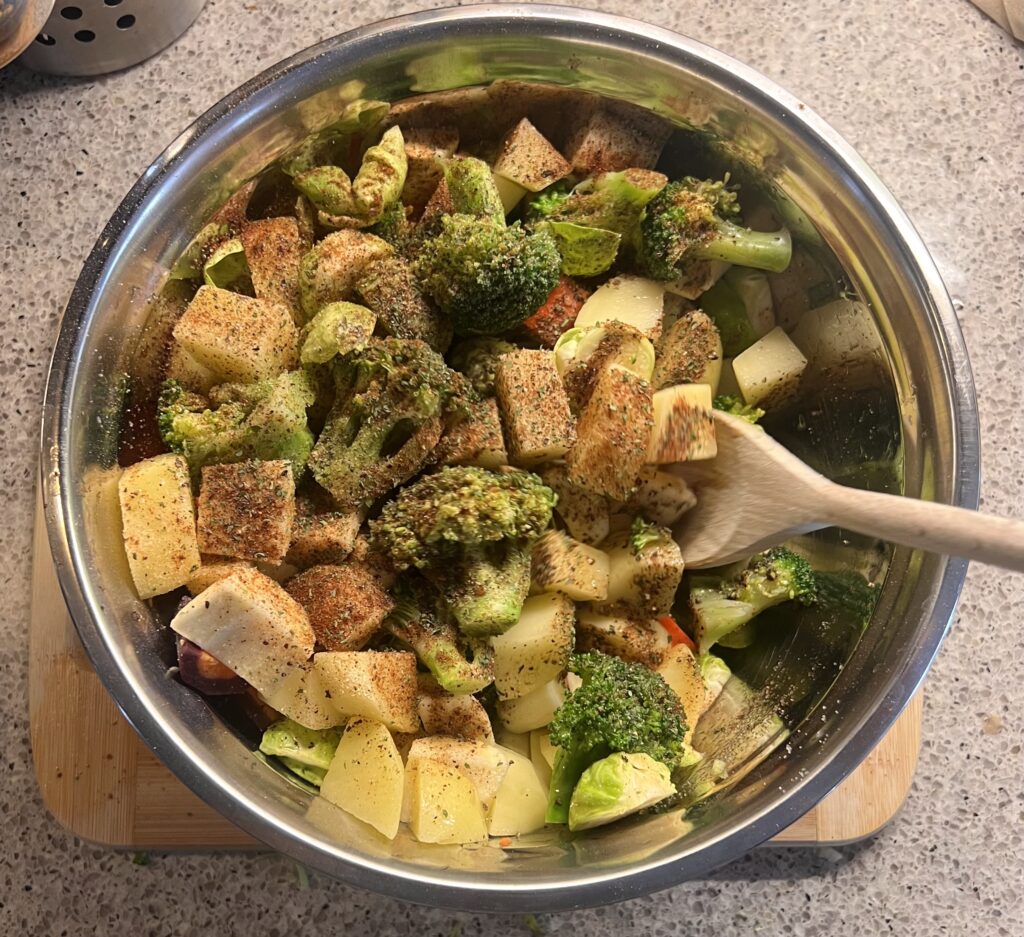
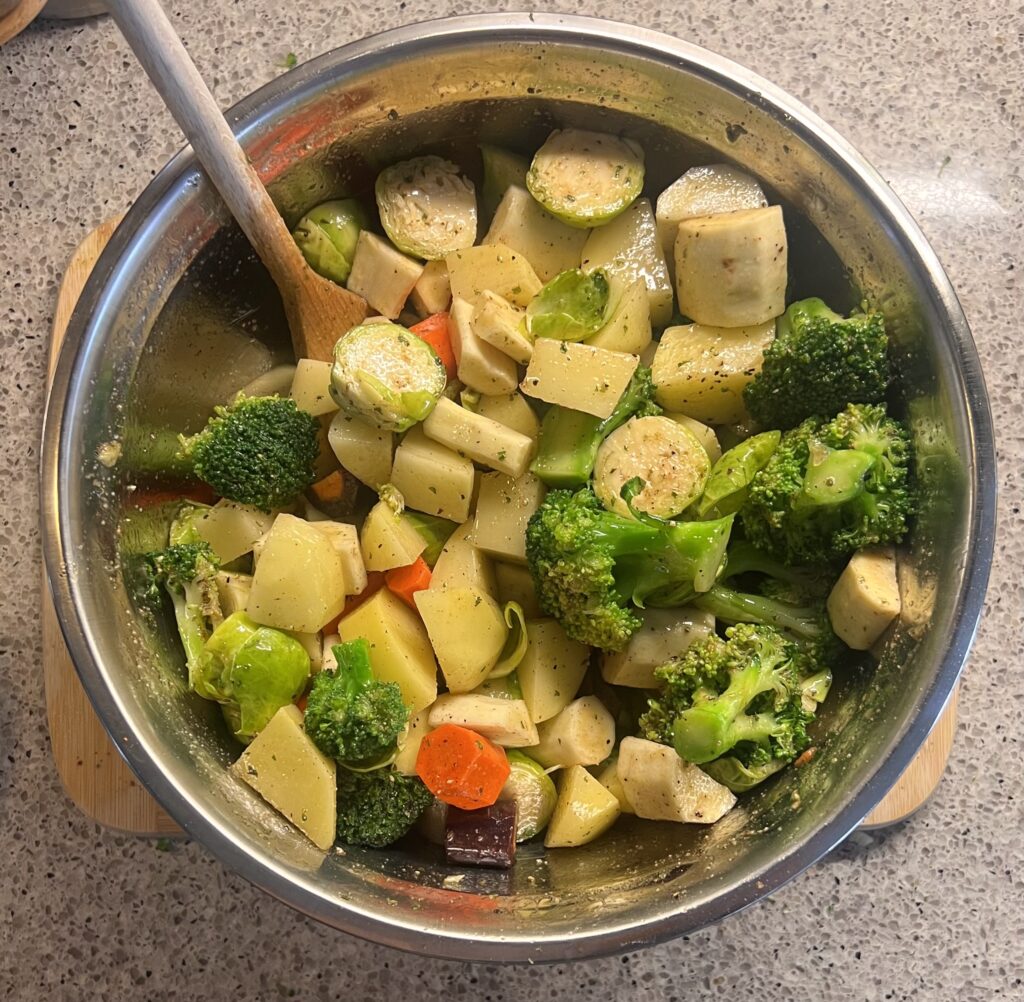
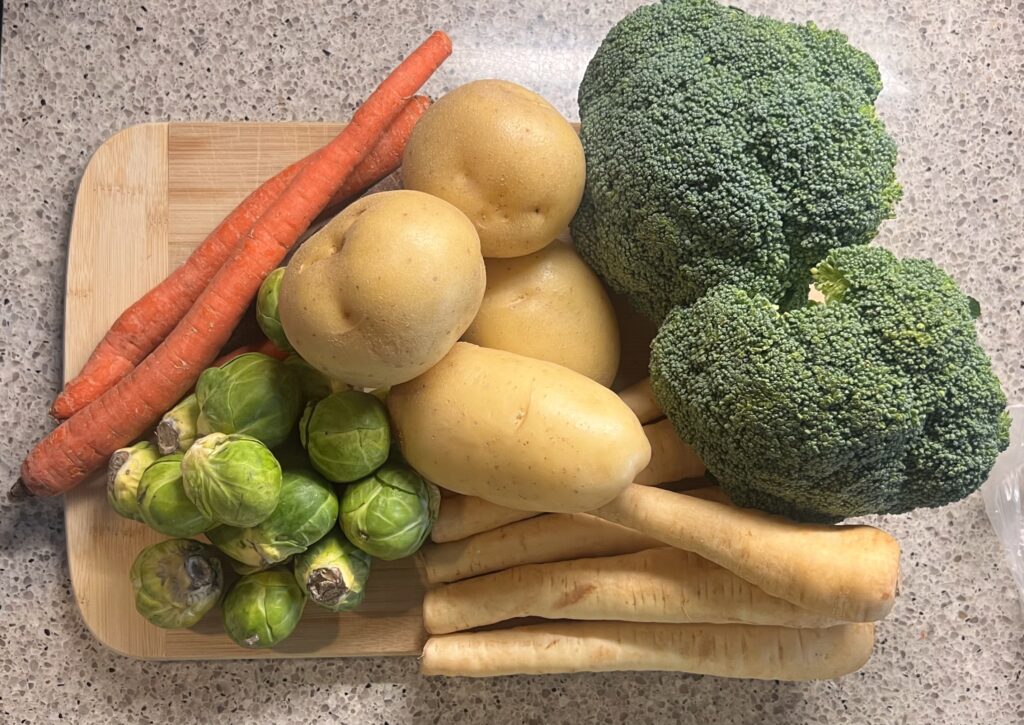
With these veggies, I often switch up my selection of veggies as well as the seasonings I use, so as to not get bored of them. I usually try to keep a mix of 4-5 different veggies on the tray, and usually stick to the same base veggies I never really get sick of – potatoes, broccoli, and brussels sprouts, but you can add any veggies you like. A good rule of thumb is to choose 1-2 starchy veggies, 2 non-starchy veggies, and 1-2 cruciferous veggies. Examples of each can include:
| Starchy Vegetables | Non-Starchy Vegetables | Cruciferous Vegetables |
| White/gold potatoes Sweet potatoes Parsnips Peas Corn Squash Pumpkin | Carrots Mushrooms Peppers Zucchini Tomatoes Asparagus Eggplant Artichoke hearts Leeks Onions | Broccoli Brussels sprouts Cabbage Bok choy Turnips Cauliflower |
As for seasonings, the world is truly your oyster. Even adding just oil, salt, and pepper will enhance the natural flavours of the vegetables as they roast, resulting in a delicious, neutral-tasting veggie medley that you can pair with stronger flavours, like adding them into a pasta dish or pairing them with a herby yoghurt dip. I generally prefer to season them just a touch more, adding garlic, paprika, turmeric, and a light dusting of chilli powder, which gives the veggies a delightfully warm taste. Pre-made spice mixes are a great option here, or some other options you could go with are:
- Curry inspired
- Salt, pepper, garlic, ginger, turmeric, cumin, coriander, asafoetida, and chilli flakes – finish with fresh cilantro right out of the oven
- Roast dinner inspired
- Salt, pepper, garlic, rosemary, thyme, honey, and finish with parsley right out the oven
- Mexican inspired
- Salt, pepper, chicken bullion powder, paprika, chilli powder, garlic, cumin, and finish with lemon juice out the oven
- Honey garlic mustard
- Salt, honey, garlic, mustard, apple cider vinegar
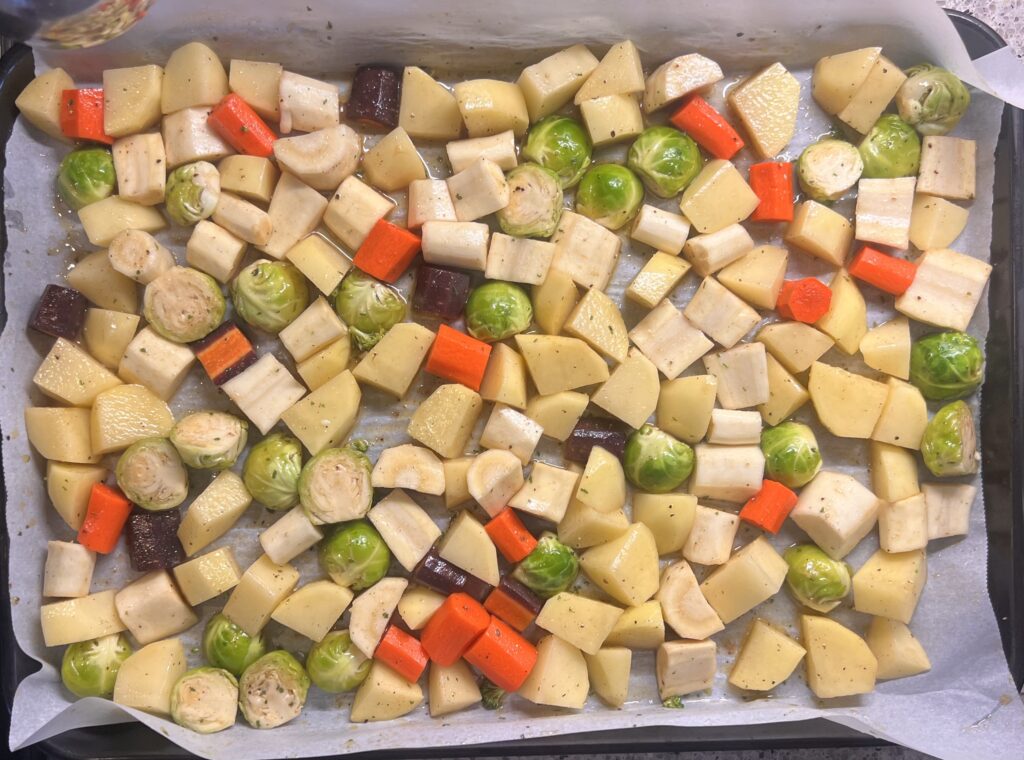
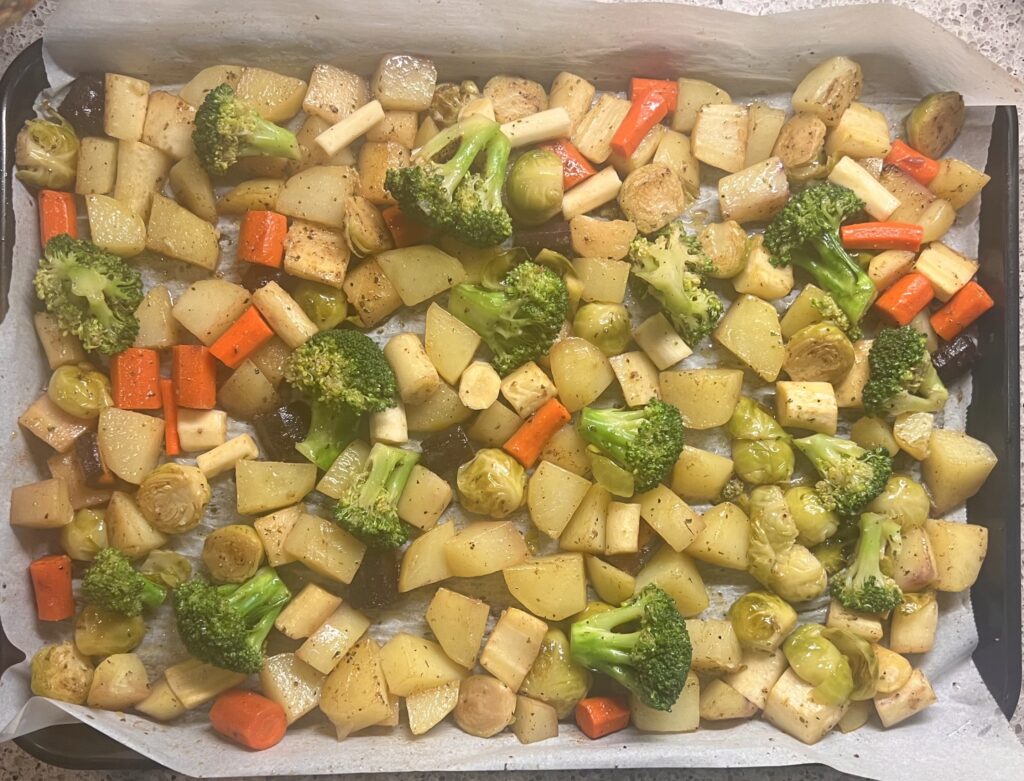
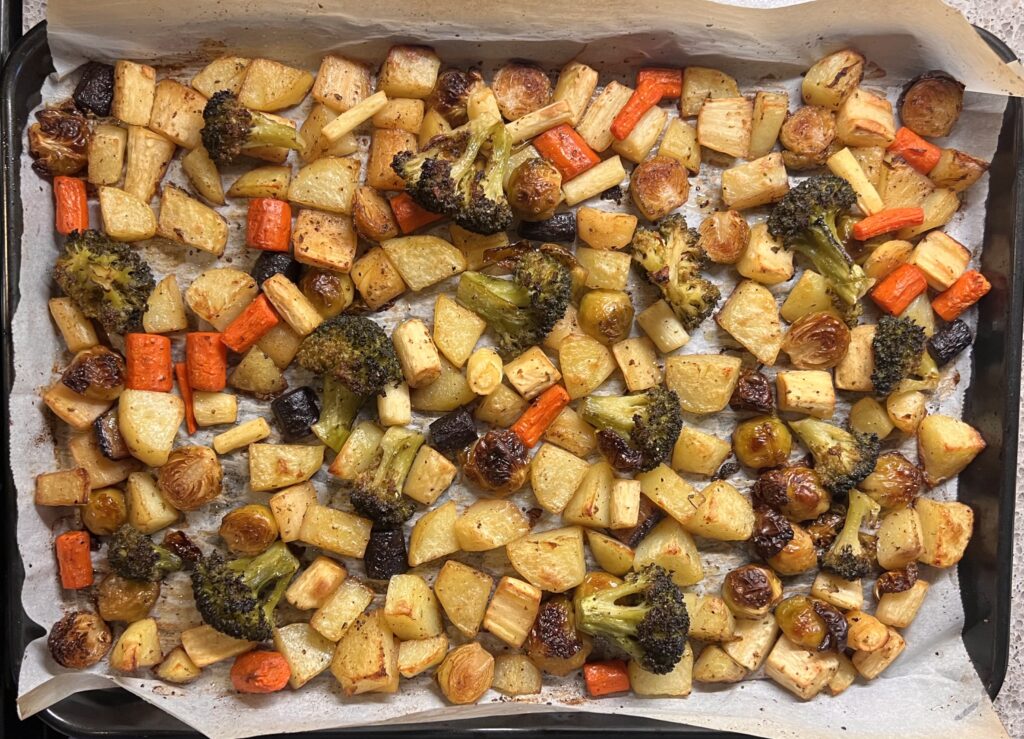
Prepping and cooking the veggies entirely depends on what veggies you’re using. Firmer, bigger vegetables will require a longer cook time, whereas cruciferous or smaller vegetables will require less time to cook (if you want them to keep some of their bite). I generally stick to the same temperature throughout cooking (400 degrees) and vary the cook times by putting the vegetables that need more time, like potatoes, parsnips, beets, etc. in first, and then adding the vegetables that require less time to cook like peas, broccoli, kale, or cauliflower in for the last 15-20 minutes of cooking, after the first round of veggies have been in for 15-20 minutes or so. All together, the roasting process should not be longer than 45 minutes.
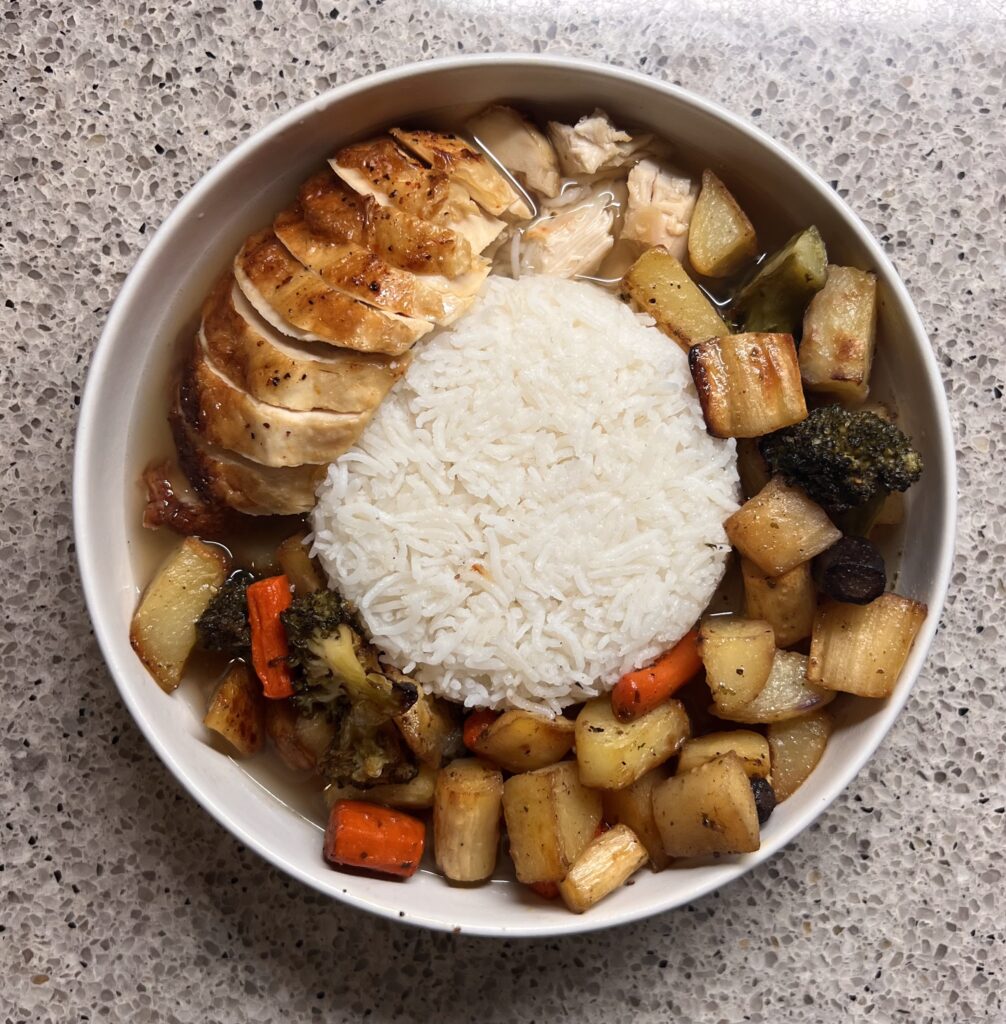
And just like that, you have a batch of delicious, fibre-heavy roasted vegetables that keep for up to 4 days in the fridge. They completely take the guesswork out of dinner, and help you get a healthy serving of vitamins, minerals, antioxidants, and soluble fibre with minimal prep. Play around with combinations and flavours to find your ideal mix!
Ingredients:
5 cups of raw, washed vegetables, all cut to approximately the same size
4 tbsp oil of choice
3 tbsp garlic powder
2 tbsp paprika
1 tbsp turmeric
1 tbsp chili powder
Salt to taste
Pepper to taste
Method:
- Preheat the oven to 400 degrees Fahrenheit.
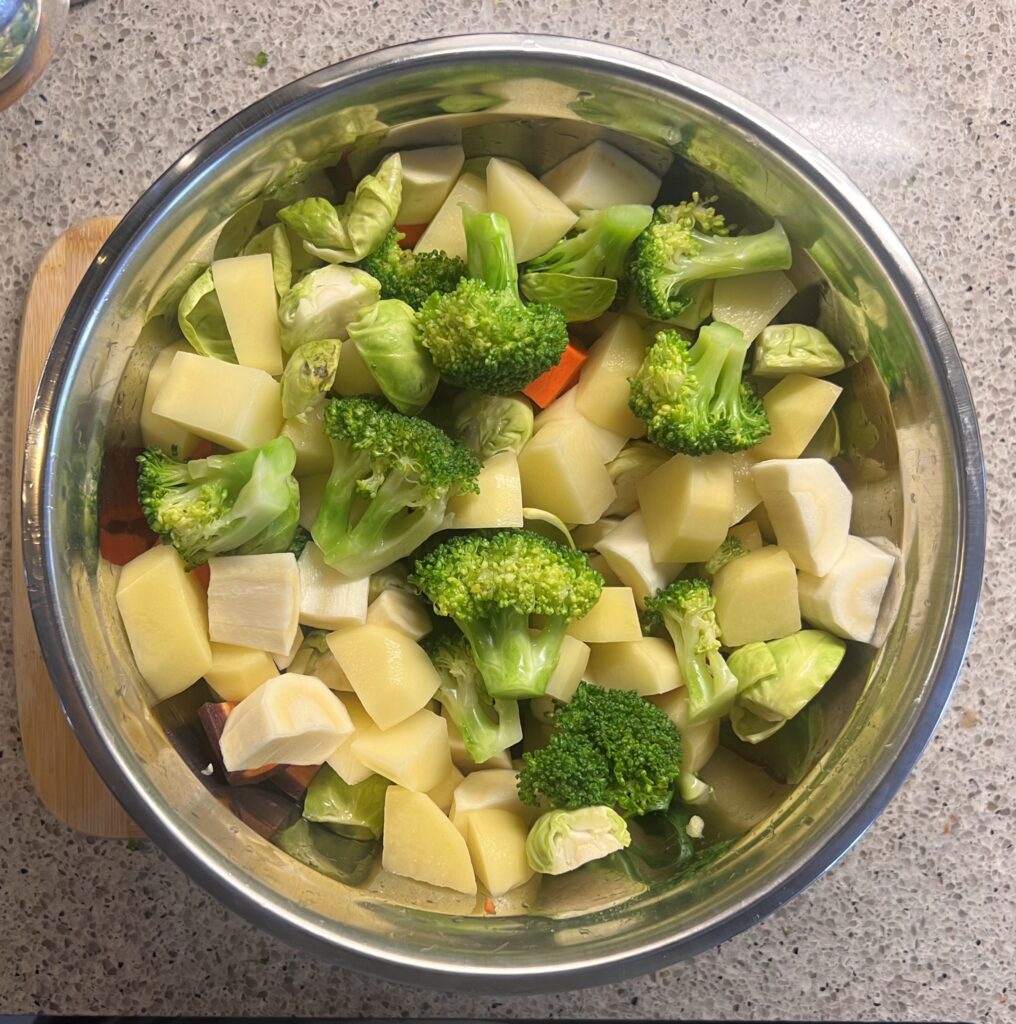
- Place your washed, chopped vegetables into a bowl. Add the oil and all the seasonings and thoroughly mix to combine.
- Pick out the firmest vegetables from the mix that require the longest cook time (e.g. potatoes, turnips, beets, squash etc.) and spread them out on a lined baking sheet. Place in the preheated oven and bake for 15 – 20 minutes, until 3/4 of the way done. Remove the tray from the oven and give the veggies a mix every 10 minutes.
- After the initial bake, remove the tray from the oven and give everything a good mix. Add the remaining veggies and return the tray to the oven.
- After 10 minutes, check the veggies and see if they are cooked to your preferred doneness. If not, mix them around again and return the tray to the oven, continuing to check them every 5 minutes until done.
- Enjoy immediately, or let cool completely on the tray before transferring to a storage container and storing in the fridge for up to 4 days.
Notes:
- To reheat the veggies in the oven, spread them on a lined baking sheet and place in the oven. Start preheating the oven to 400 degrees Fahrenheit – by the time the oven is done preheating, the veggies will be warmed through, and you can leave them in there longer to continue crisping or remove.
- To reheat in a pan, add a little oil to a hot pan and toss the veggies in there, letting them sit for a minute or two before tossing again – repeat 2-3 times until the veggies are warmed through and have crisped up.
- If you like your veggies with a little more char, you can broil them for the last 5 minutes of cooking – this will crisp and slightly blacken the tops of the veggies, giving them more of a grilled flavour. Keep an eye on them when broiling, however, as they can go from a slight char to a burnt crisp very quickly!
- When prepping the veggies, try to keep them as close to the same size as possible, especially for the firmer vegetables. If working with small veggies like corn or peas, add these in at the very end of cooking, allowing them to roast for no longer than 10 minutes, to avoid them having an unpleasant texture.
xx,
girlwhocooks