I have a secret to admit – I don’t like tomatoes. Even at almost 30 years old I’ll purposely pick around them in the salad bowl, remove them from burgers, and order nachos at restaurants sans tomatoes. I have never been a fan of tomatoes in their raw form, despite trying them every which way, and for a long time I wasn’t a fan of cooked tomatoes either. I would avoid eating anything that I knew had tomatoes in it, it didn’t matter if they were blended, or chopped into tiny pieces, cooked all the way down. I even favoured white sauce pizza for years over a traditional red sauce pie. I would instantly get a hit of that sweet carmelized tomato taste and be immediately turned off the rest of the dish. Perhaps I had been exposed to too many poorly cooked kid’s menu spaghettis that the flavour of cooked tomato was forever ruined for me. What I didn’t realize was that tomatoes were actually in a lot of dishes I ate and loved, they were just heavily disguised by stronger flavours and longer cook times.
As I got older, I started to develop more of an appreciation for cooked tomatoes. The more I started cooking my own food I realized what a crucial role they played in so many dishes – curries, chillies, and of course a multitude of pasta sauces. I still found myself having to heavily disguise whatever dish I added them into, but I slowly started to re-introduce them into my kitchen and experiment with them more. I found that the longer they cooked the more tolerable the taste became, and a few herbs strategically added in throughout the cooking process made them actually stomachable. I started to use them more and more, and eventually set myself a goal to make a red sauce that I would actually enjoy.
Why? Honestly, I was kind of a picky eater as a child. I had fruits and veggies that I loved, (namely carrots, broccoli and green apples, thanks to my Grandmother’s famous dessert of green grated apples over vanilla ice cream topped with a sprinkle of salt). As I got older I started re-trying foods that I stayed far away from as a child, and to my surprise I ended up loving a lot of them – roasted brussel sprouts, fried eggplant, pureed squash. After researching some I found out that our tastebuds actually change as we age, and so flavours that we may not have been fans of as children may end up being tolerable or even enjoyable as adults. I, of course, still have foods that I will not go near as many of us do, (looking at you, mushrooms) but more often than not I have foods that I will only eat when cooked in a specific way. For example, I’ll devour a bowl of acorn squash soup, but can’t eat a slice of roasted acorn squash. I love shaved, raw rainbow beets on a salad but roasted beets taste like dirt to me.
All this to say that while I was pleased that I had so many foods I despised for years welcomed back into my diet, me and tomatoes still had some issues to work through. They look delicious, come in so many varieties, are available everywhere, and so many recipes are based around them, so why could I not like them? People around the world have recipes dedicated to making the humble tomato the star of a dish, and it was frustrating to me that I didn’t like a single one. Having a goal to have one tomato-based dish that I loved became less of a challenge in my mind and more of a compromise – if I could make a red sauce that I liked, I finally won the battle (not the war) of me vs. tomatoes, and that would be enough.
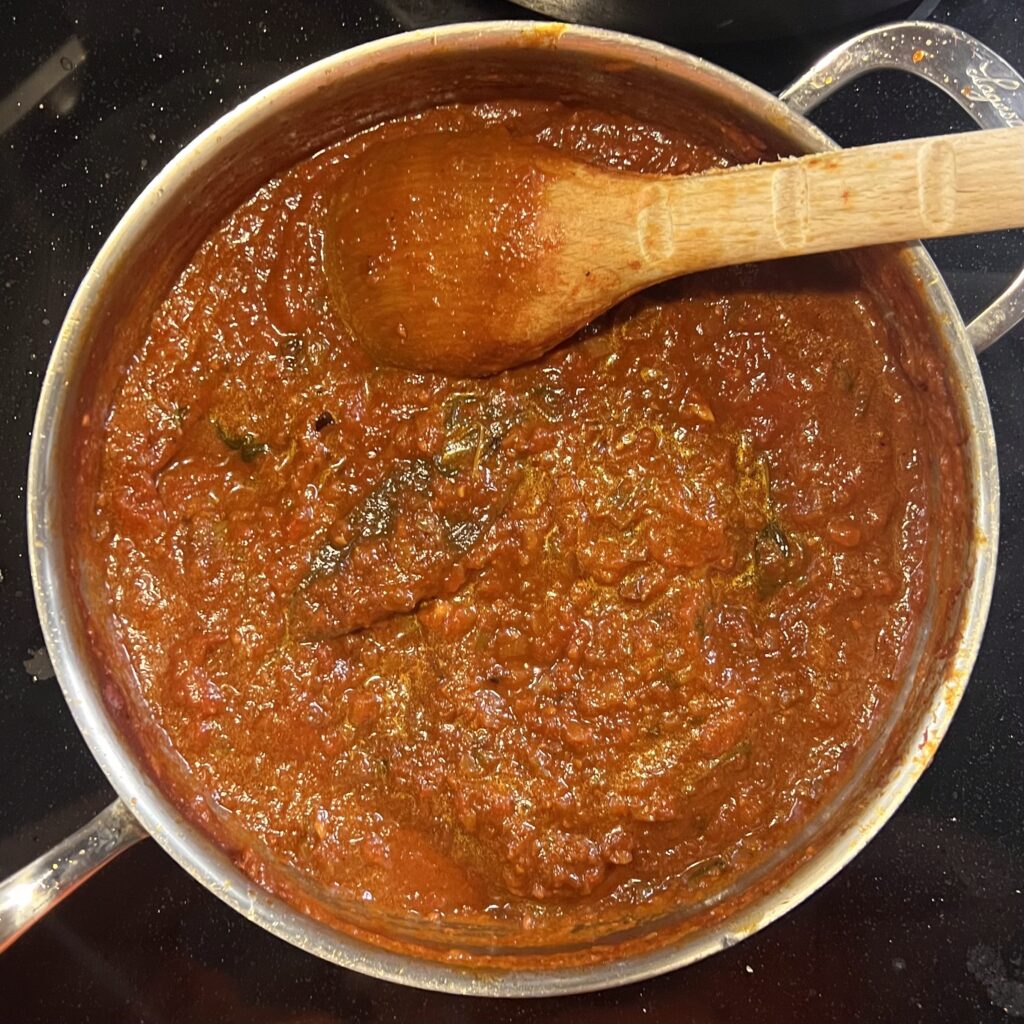
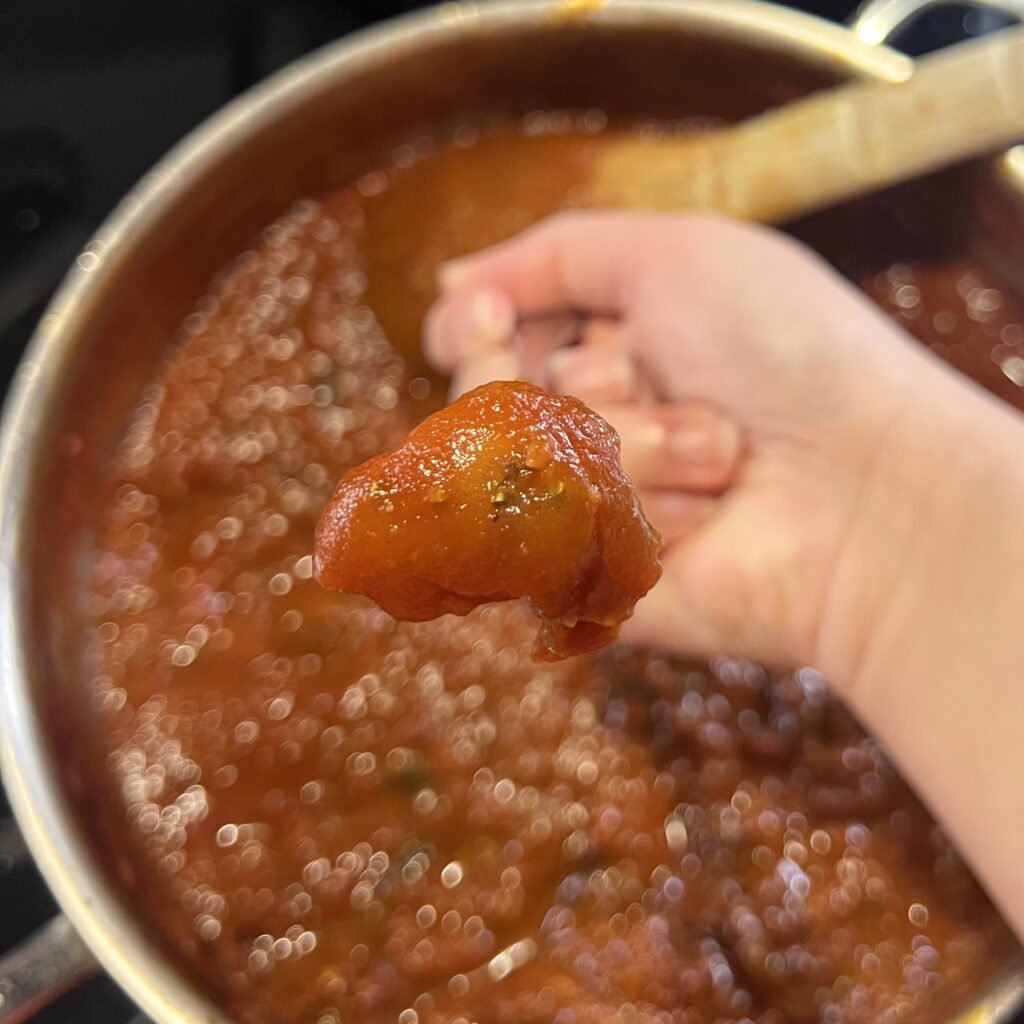
When testing this recipe, I went through countless tins of tomatoes, so many sprigs of basil, and I don’t even know how many cloves of garlic. I even tried a number of pre-made jar sauces, but found myself always adding additional seasonings to further mask the tomato-forward flavour. My freezer slowly filled with bags of failed red sauces that had to be disguised in other recipes, until one day, I found the perfect blend of aromatics, herbs, and cook time that yielded a sauce that I didn’t only stomach – but loved. This sauce, surprisingly simple and which simmers on the stove for a minimum of 2 hours, includes a hefty amount of onion, garlic, basil and other herbs – no sugar, no baking soda. The end result is a slightly acidic, very mellowly sweet, rich and flavourful sauce which is sure to woo even the biggest tomato haters out there. I have finally made my peace with tomatoes. Or … tomato soup next, maybe?
Ingredients:
1 28-fl oz can of whole, peeled tomatoes (no salt added)
2 tbsp tomato paste
1 small white onion, diced
1-2 jalapenos, deseeded and diced
6-10 cloves of garlic (about 4 tbsp chopped)
4 tbsp olive oil
2 large sprigs of basil
2 tbsp dried parsley
1 tbsp dried oregano
2 large bay leaves
Pepper to taste
Salt to taste
Optional:
1 tbsp red chili flakes
Method:
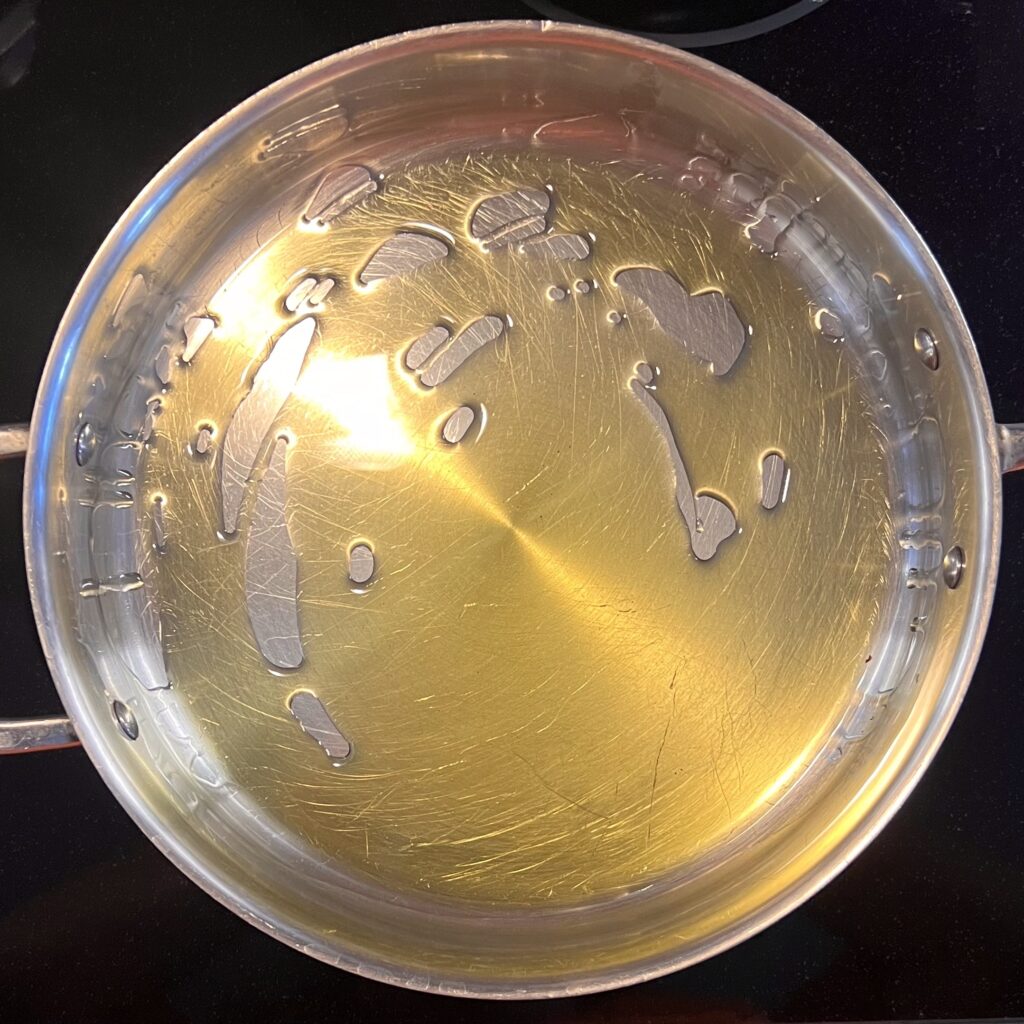
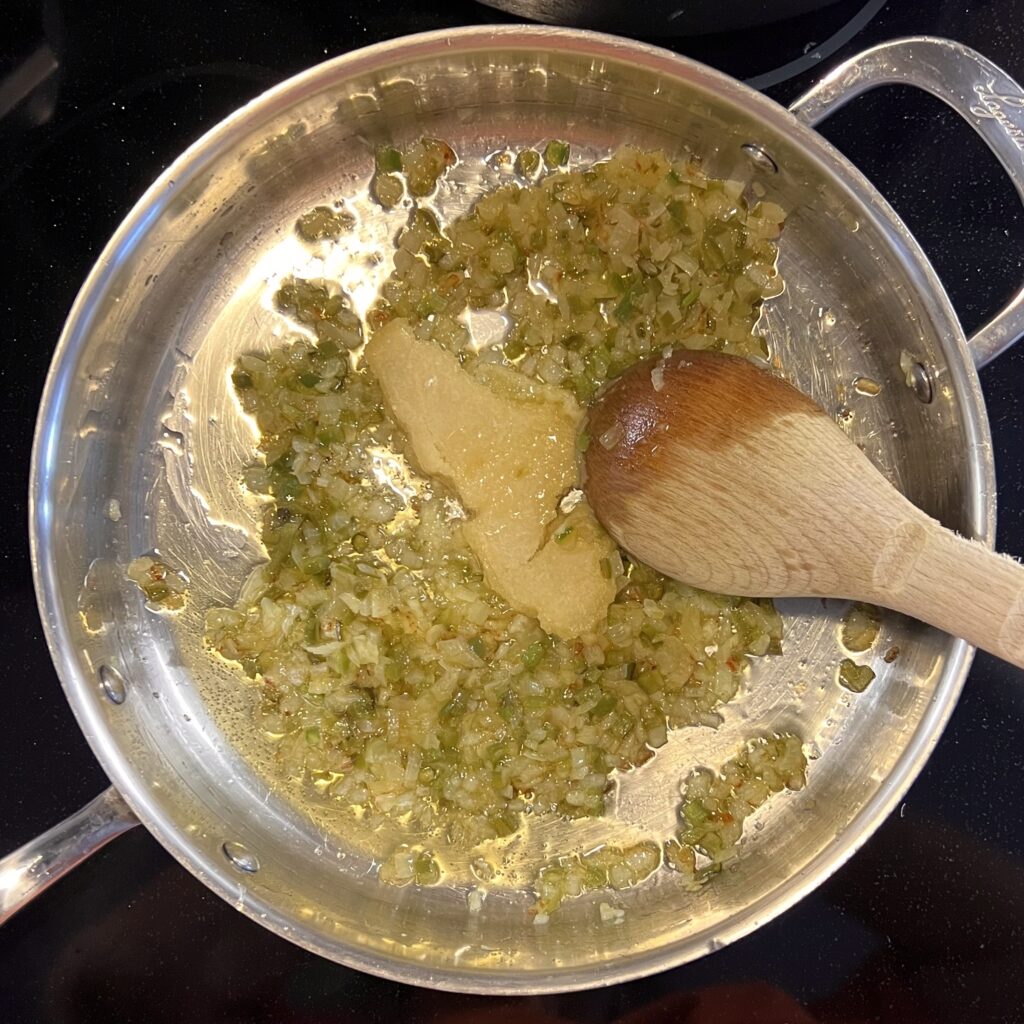
- In a large, shallow sauce pan, gently heat the olive oil over medium low heat until shimmering. Add your onions and jalapenos and cook until translucent and soft. Add your garlic and a hefty pinch of salt, and cook until garlic is very fragrant and starting to turn ever so golden.
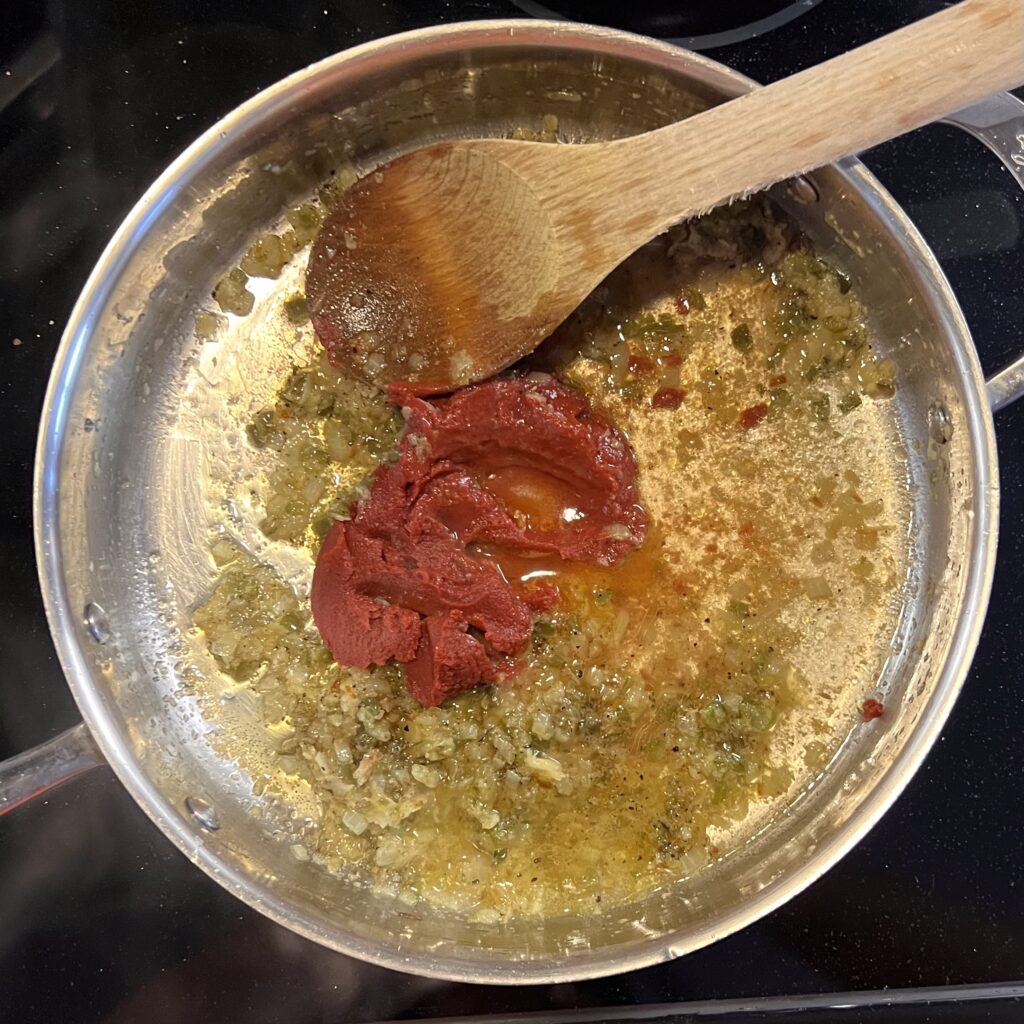
- Add your tomato paste and about a 1/4 cup of water. Mix to combine, and fry off the tomato paste until the water evaporates and the paste has turned a deep, almost brown red colour, about 5-8 minutes. Turn the heat up slightly if the colour is not changing fast enough.
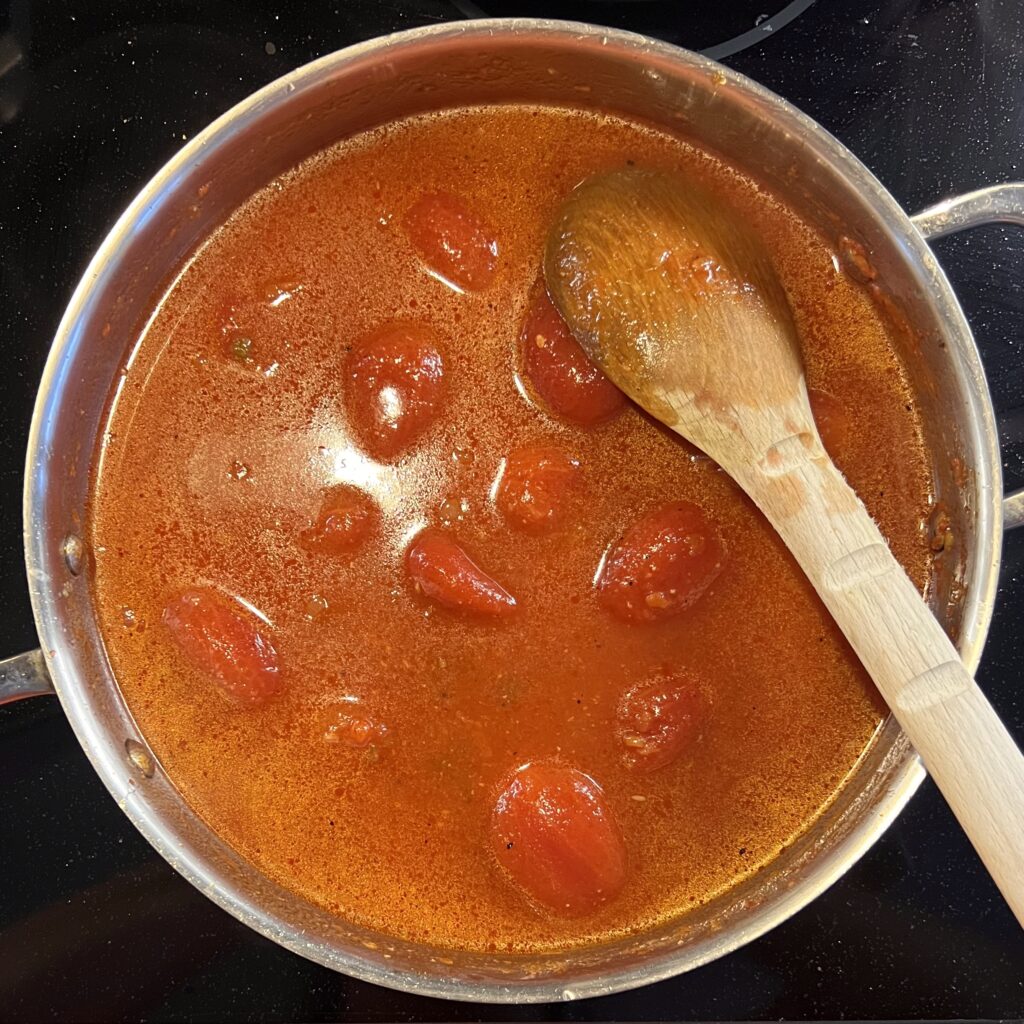
- Once the tomato paste is sufficiently browned, add your canned tomatoes, along with the juices and a full can’s worth of water. With the back of a wooden spoon, smash the tomatoes down – if they’re resisting, leave them to cook a bit before trying again. Turn the heat up to medium high.
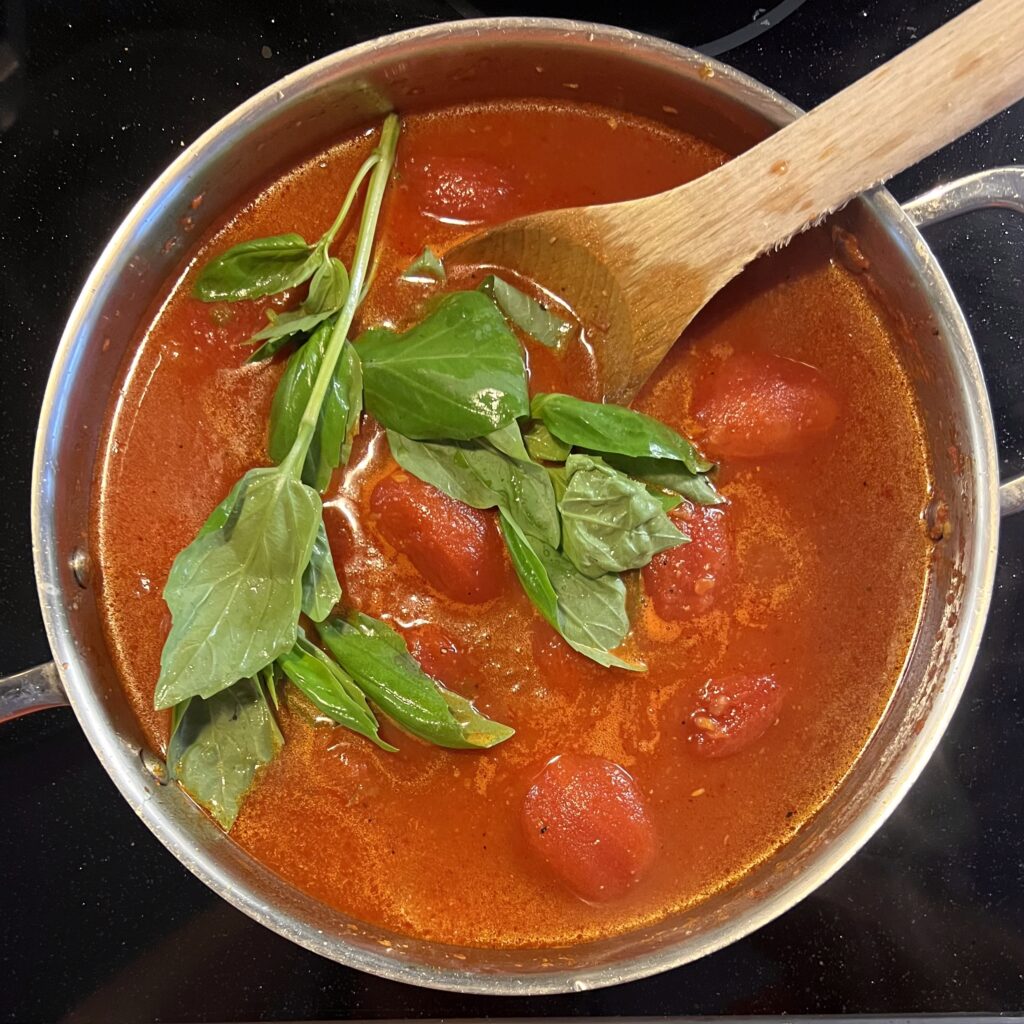
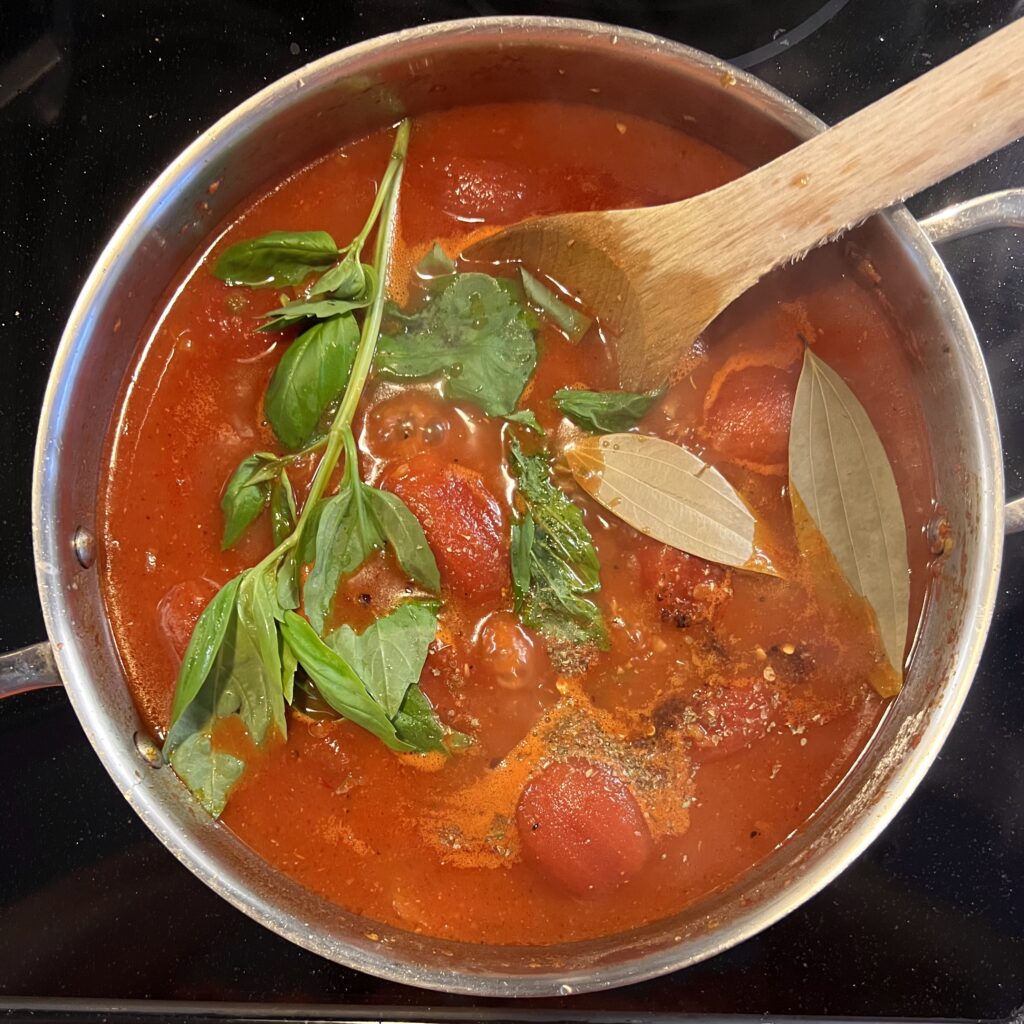
- Add your seasonings – the bay leaves, oregano, basil sprigs, pepper, parsley and red chili flakes if using, and mix thoroughly to combine. Add another hefty pinch of salt.
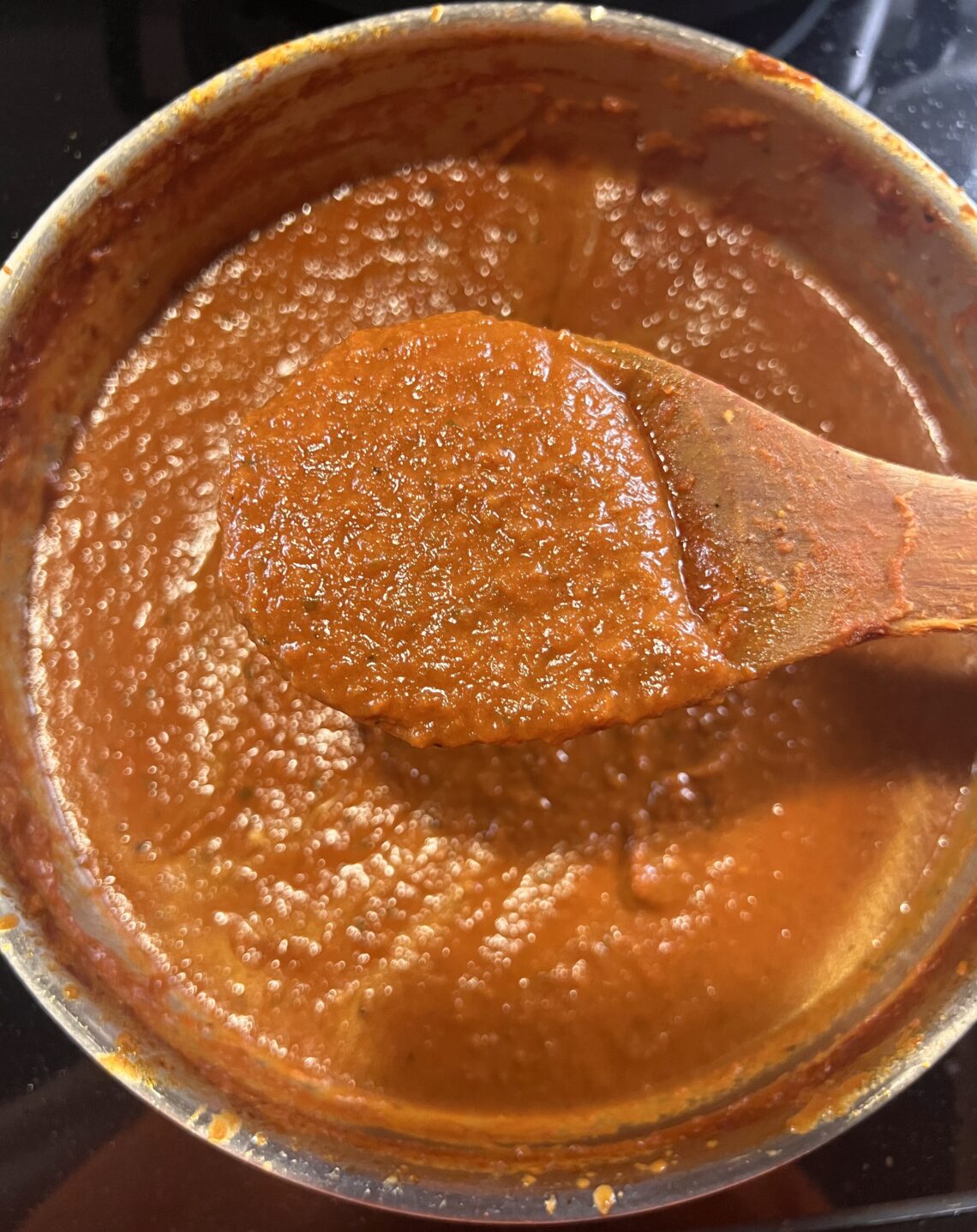
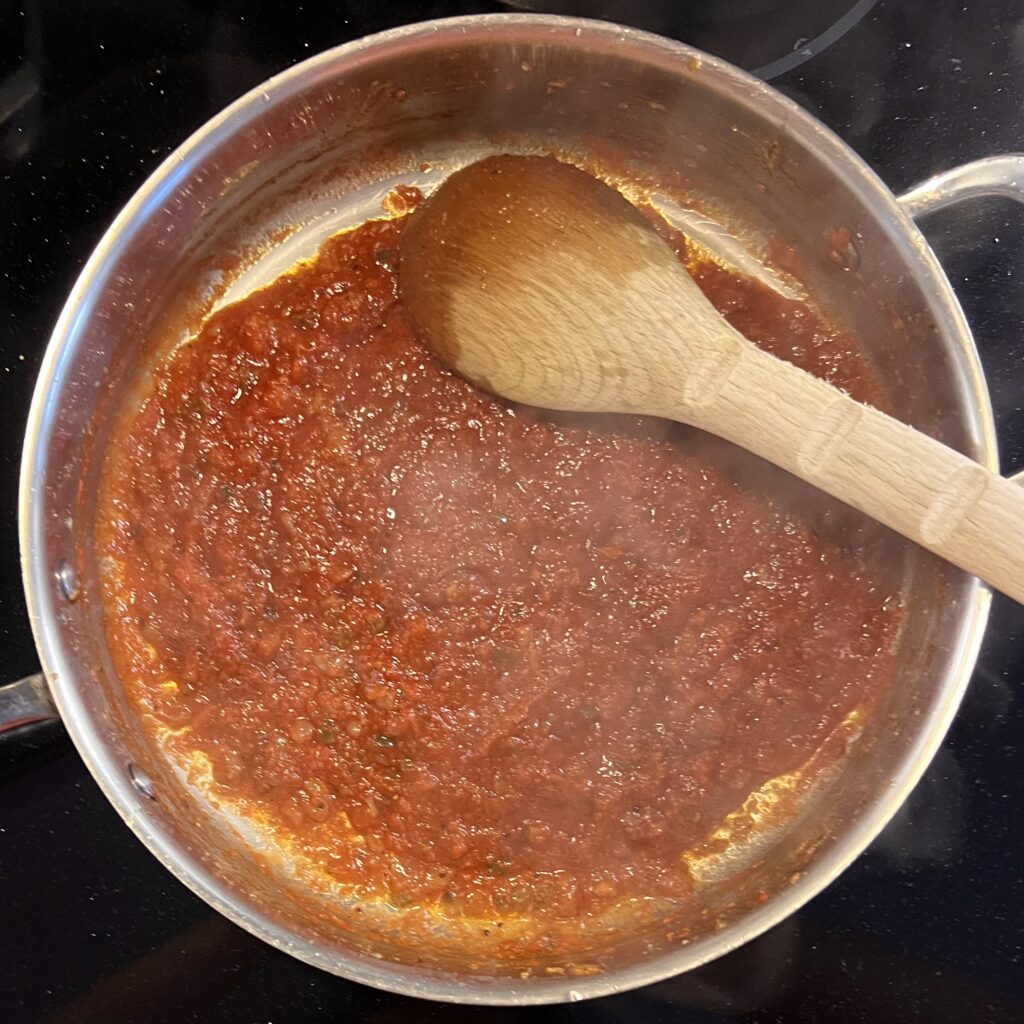
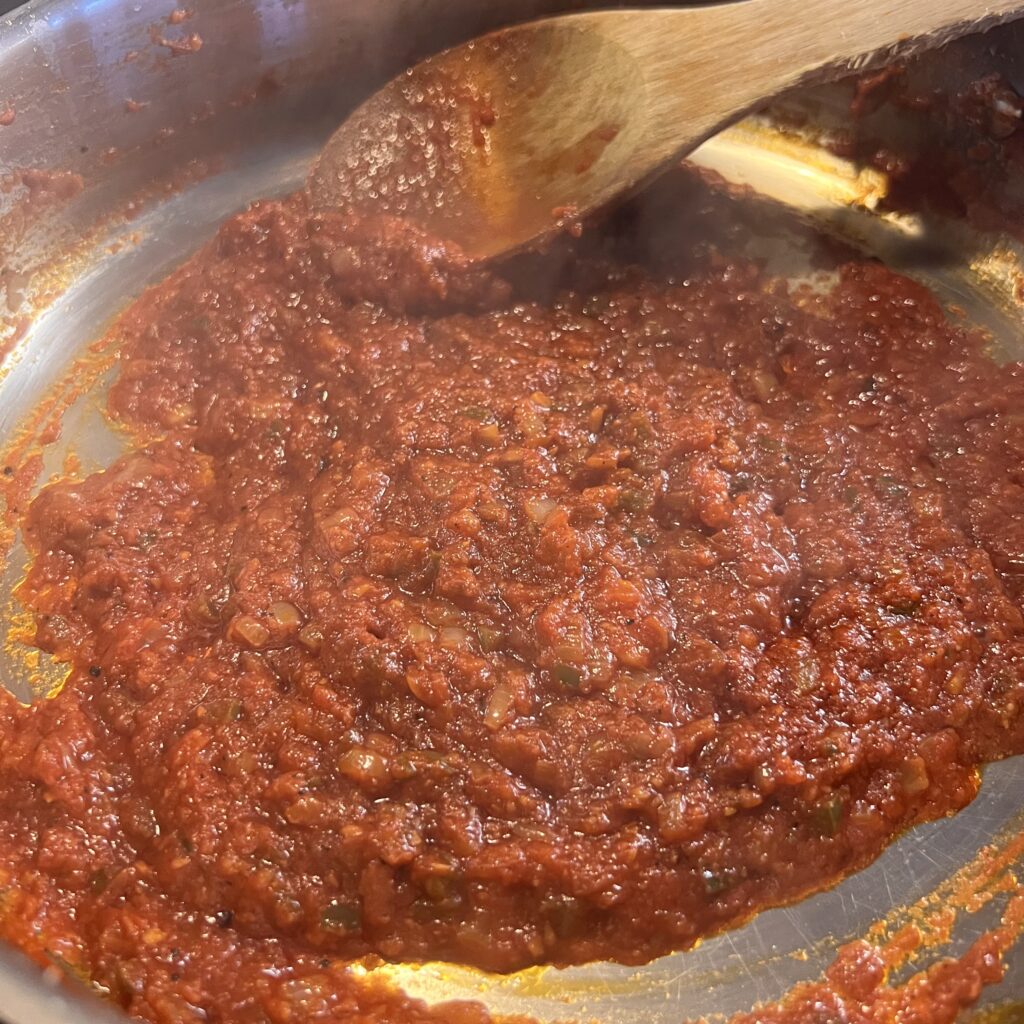
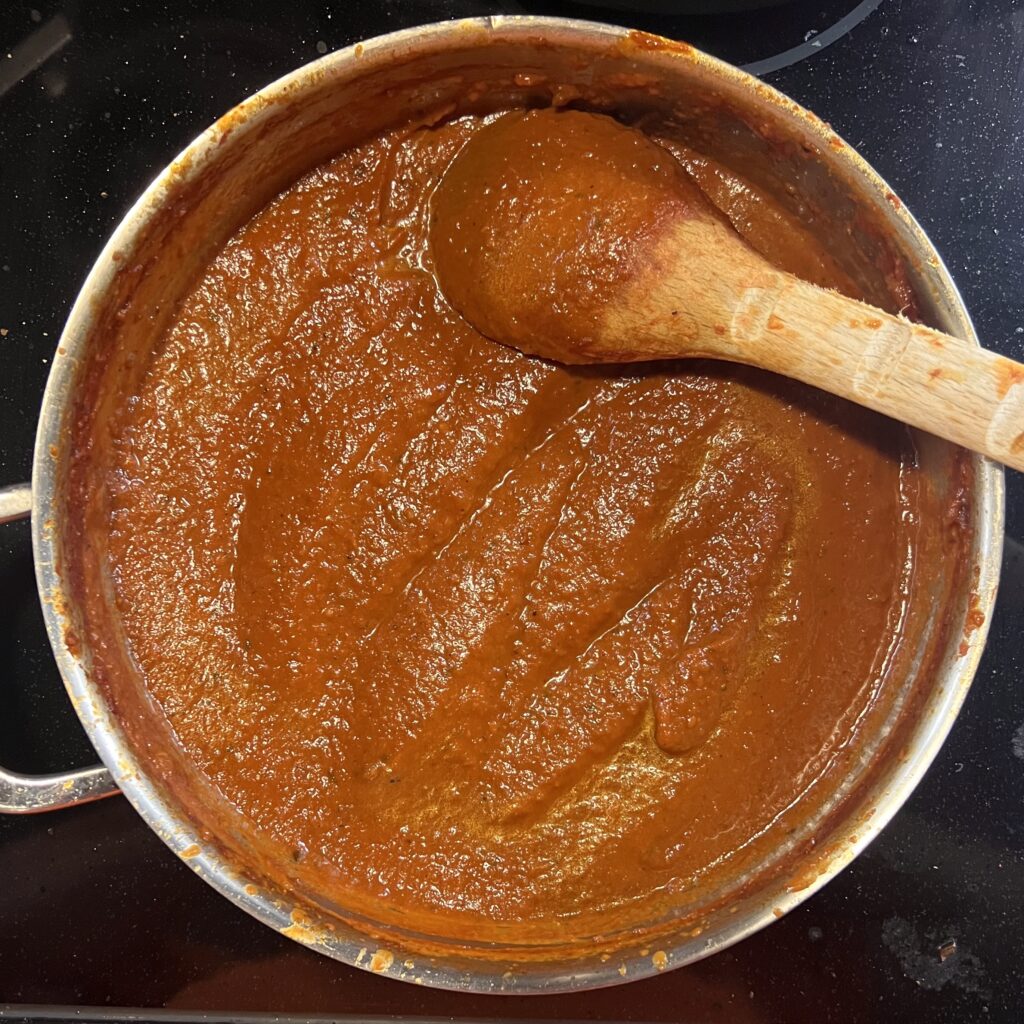
- Bring the mixture to a boil and then reduce to a simmer. Let the sauce cook, uncovered, for a minimum of two hours, stirring thoroughly and crushing any remaining tomatoes down every 15 minutes. The colour should deepen significantly. Add water if the sauce becomes too thick – by the end of cooking the sauce should be thick enough that when you drag your spoon through it it leaves a trail.
- Once the sauce is cooked, remove the bay leaves and the stems of the basil (it’s okay if the leaves stay in the sauce) along with the tops of the tomatoes that haven’t melted into the sauce and transfer to a blender or use an immersion blender to blend the sauce until smooth. If using with pasta, don’t add salt until you’ve mixed it with the pasta/pasta water – if not, add salt to taste now.
- Enjoy with pasta, as a topping for chicken parm, or as a sauce for meatballs!
Notes:
- You can let the sauce go for longer, but beware of scorching the pot – this will cause the sauce to become overly bitter.
- If you leave the seeds in the jalapenos, the sauce becomes more akin to an arribiata sauce – a spicy, tomato based sauce that is also delicious with spaghetti, gnocchi, or fettuccine.
- If at any point you add too much liquid to the sauce, turn the heat up and stir continuously until it becomes the consistency you want again.
- When adding the sauce to pasta, make sure to reserve some pasta water to use to bind the sauce to the pasta and add another hit of saltiness.
xx,
girlwhocooks