When thinking of British cuisine, people tend to think about a full English breakfast, or a Sunday roast, or maybe a classic victoria sponge cake. But the truth is, there are so many other lesser known regional dishes that have spread throughout the UK and further, originating from smaller towns and cities known for specific star ingredients – stargazy pies, for example. These pies, which if unfamiliar with can give the diner quite a fright at first, originated in Cornwall, a seaside town well-known for its fishing community and fresh catches of the day. The pies consist of whole fish, often sardines, baked into pastry or pie but in such a way that the heads stick out and the eyes of the fish look skyward – hence the name “star-gazy”. Sweet, in a morbid dried fish-eye kind of way.
One ingredient that can be found in numerous cities from coast to coast in as many forms is cheese. British cheddar is revered for its pungent smell and strong taste, much different from the cheddar cheeses that you find in North American supermarkets. It’s often aged for years before hitting the shelves, and unlike the softer, more pliable cheeses you may be used to, it tends to be more crumbly and a lot more firm. Some of the more famous cheeses to hail from England include Red Leicster, a bold orange cheddar with a strong bite originating in Leicester, or Blue Stilton, a semi-soft blue cheese originating from Stilton (but nowadays is manufactured elsewhere as is can no longer be manufactured there, funnily enough). One of the most beloved cheeses in Britain comes from Lancaster – Lancashire Cheese, a strong white cheddar made from British cow’s pasteurized milk and aged for between 1-24 months, resulting in a spectrum of textures to choose from ranging from the lesser aged crumbly varieties to the older, creamier varieties.
Because of it’s prevalence in so many British towns, cheese features heavily in our cuisine, from cheese flavoured “crisps” (chips), cheese “sarnies” (sandwiches), and perhaps my favourite application for a sharp cheddar – the cheese and onion pasty. Pasties, largely thought to have originated in Cornwall (the Cornish Pasty being the most famous of the pasties in the UK), are a large part of British food culture, both sweet and savory. While sweet pasties are typically filled with dried or jammed fruits, savory pasties could be filled with almost anything. You have your traditional sausage filling, typically called your sausage roll, a breakfast fit for any working man, or a bean and cheese filling, if you’re off the meats. Maybe a spiced chicken filling, if you’re feeling spicy, or you could skip all that and go with the pasty that is beloved by all – the cheese and onion.
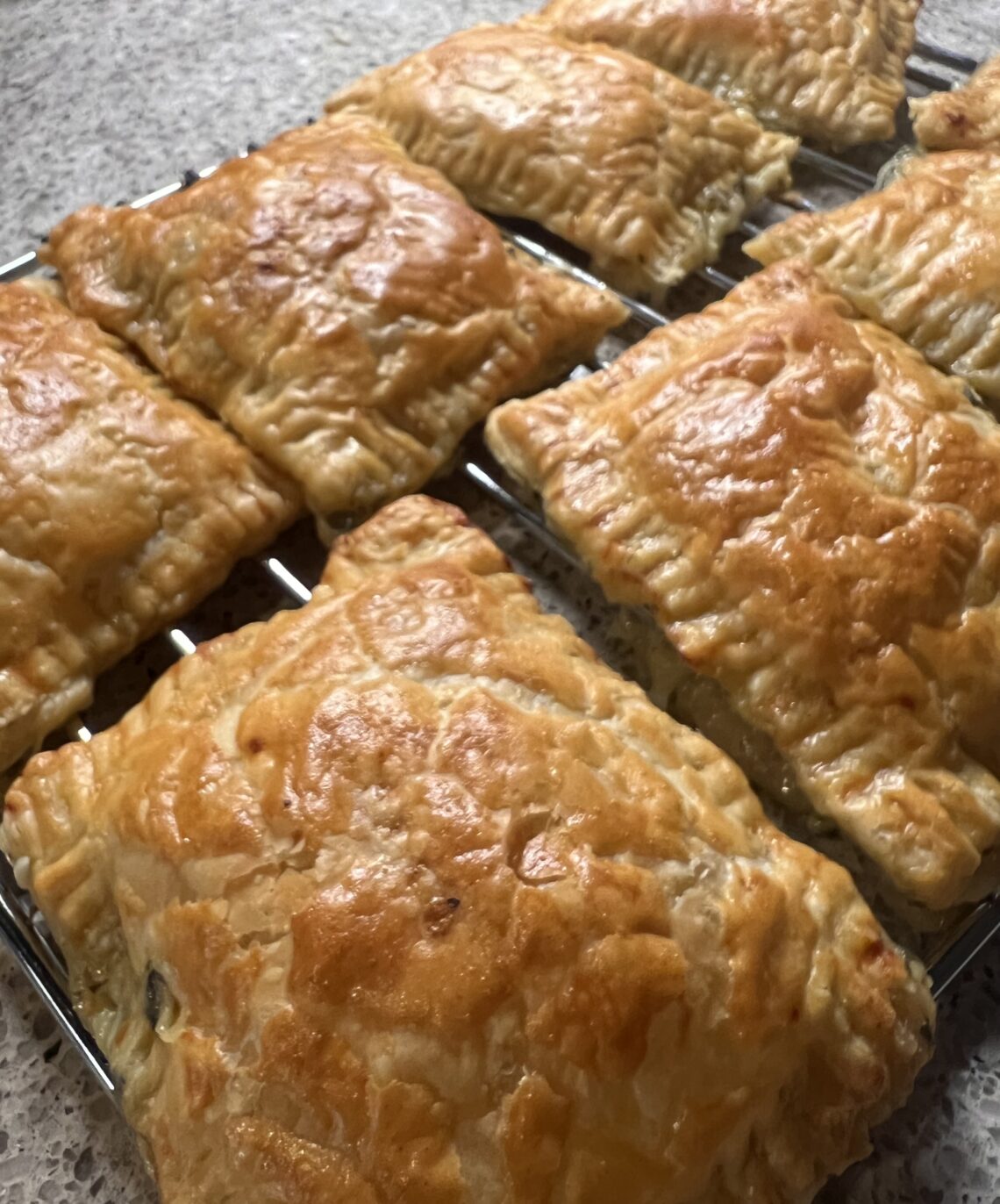
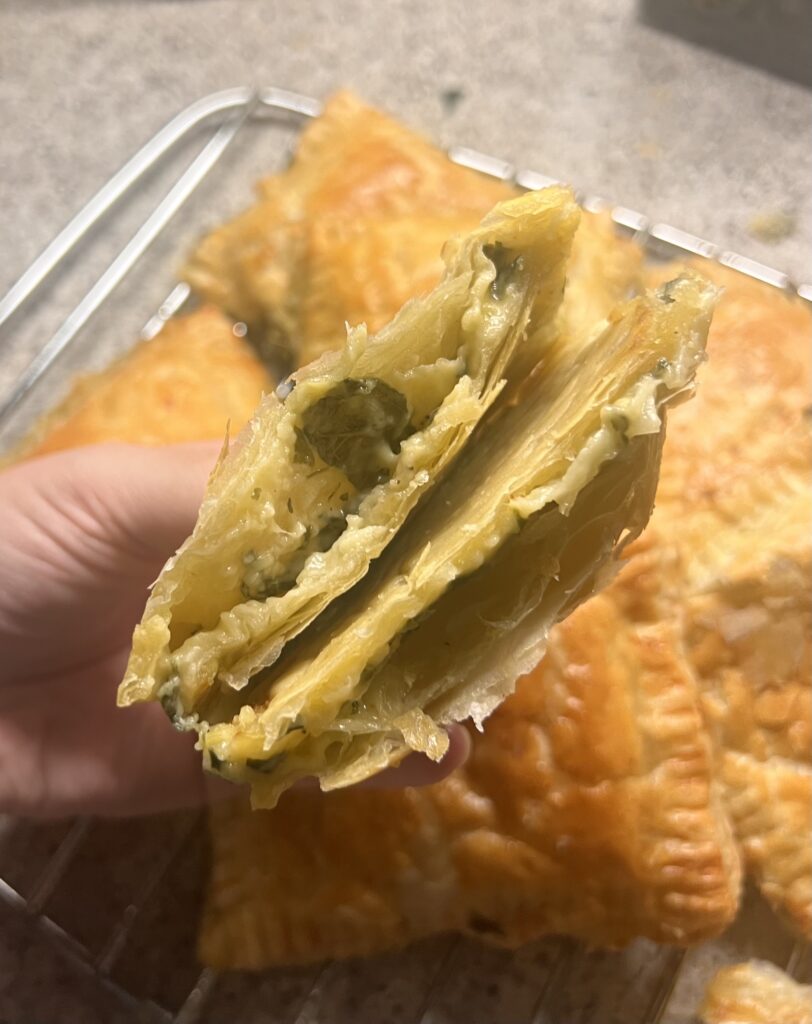
While the origin of the cheese and onion pasty is debated, with some claiming it to come from Cornwall due to its casing and some claiming it to come from Lancaster due to the Lancashire cheese typically used in the filling, it’s become a staple across the UK and can be found at practically any cafe you happen to stumble into, no matter where you are. The strong, savory cheddar pairs exceptionally well with the subtly sweet, soft and jammy onions in the filling, and the flaky pastry holding it all together adds a welcome textural element as well as enough bulk to make this pasty more than enough to stand on its own. In my recipe, I add a hefty amount of spinach to the filling (if you’re British, I’m sorry – it seems Jamie Oliver has gotten to me) to help bulk it up further and add some extra nutrition without adding any overpowering flavours to the mix.
What’s that? I – okay, yes, maybe it’s because I’m actually a recovering vegetarian anemic and never got out of the habit of adding handfuls of spinach to everything I cooked in order to avoid the dreaded iron tablet prescription. But trust me – it works here!
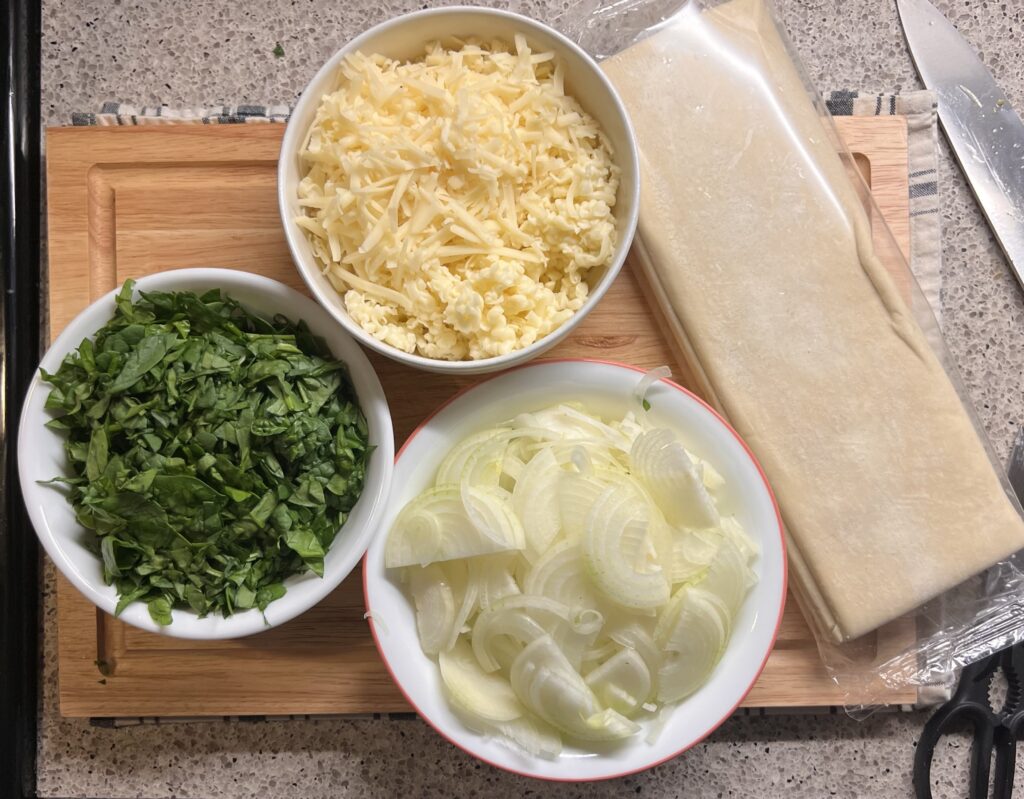
Ingredients:
1 package puff pastry
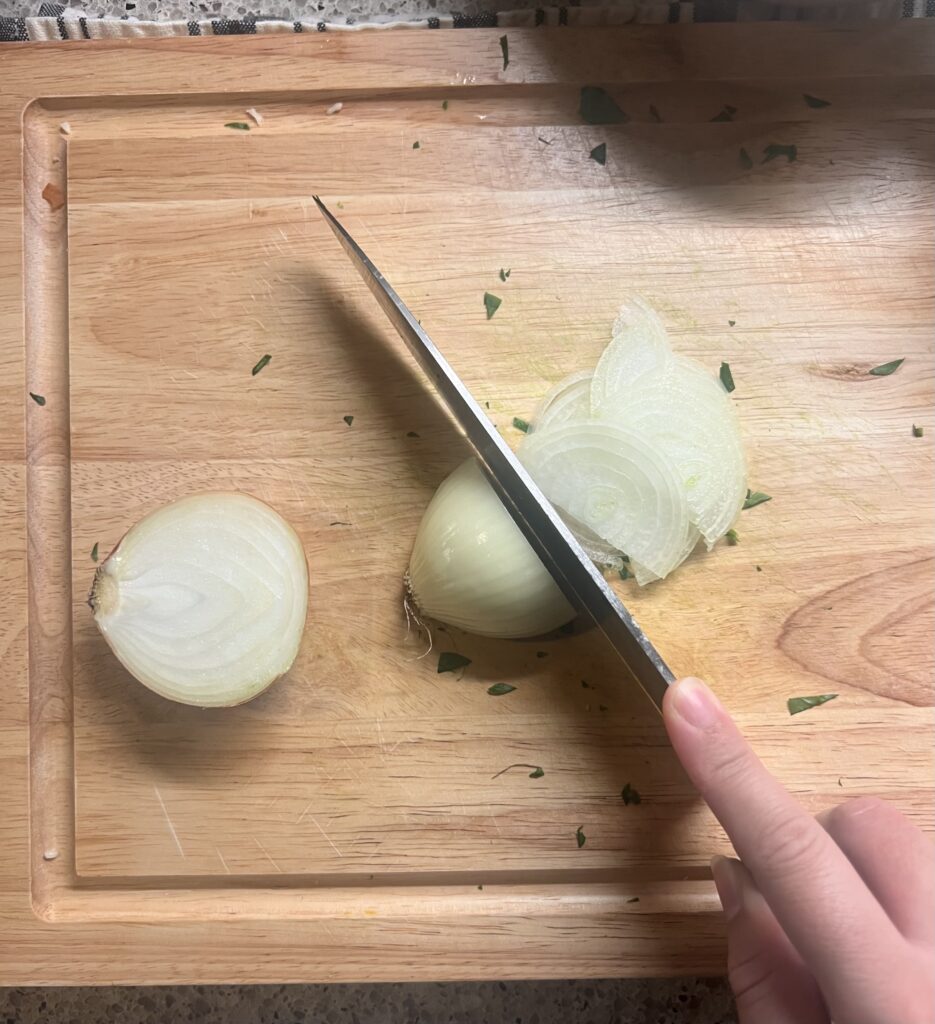
4-5 small white onions, thinly sliced
1 cup freshly shredded sharp white cheddar
1 1/2 cup freshly shredded mozzarella
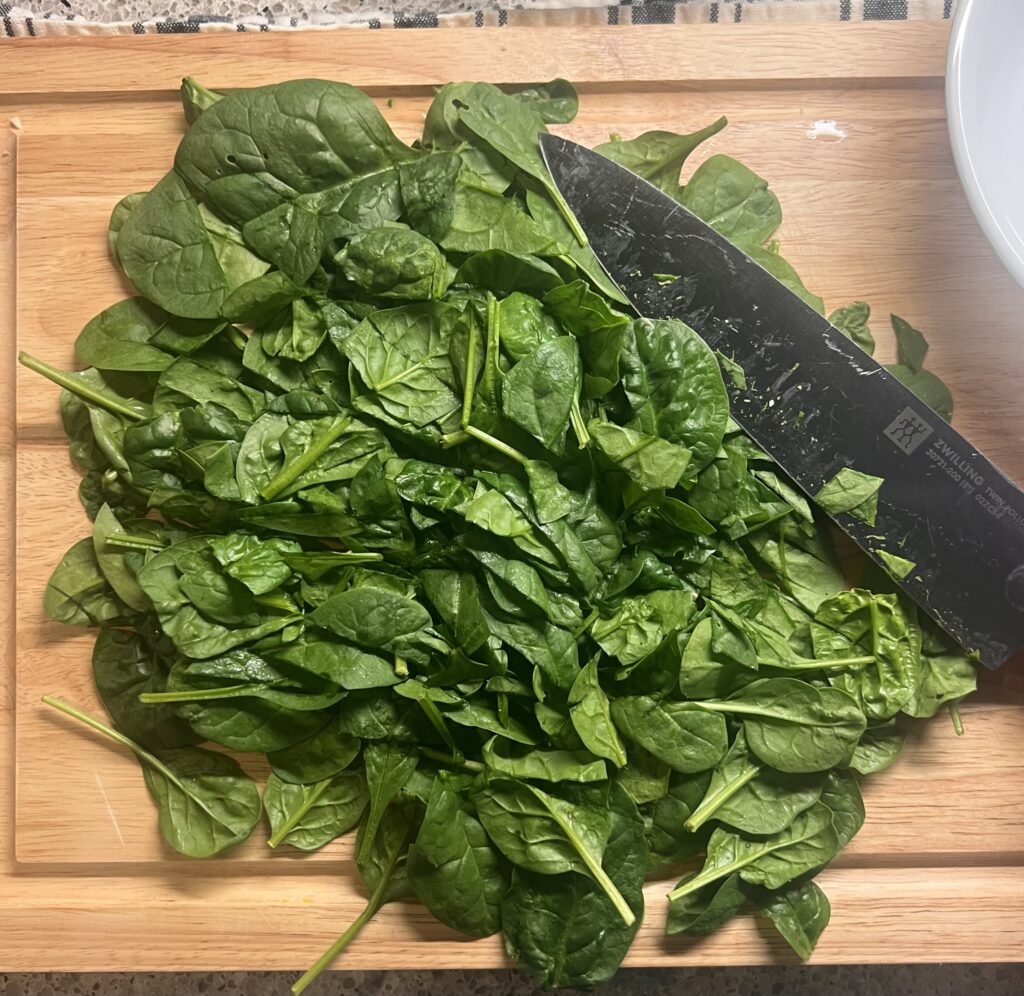
2 cups chopped fresh spinach
1 cup milk
1 tbsp minced garlic
2 tbsp oil
1 tbsp flour
1 1/2 tsp black pepper
1 tbsp dried parsely
1 egg, whisked (for egg wash)
Salt to taste
Method:
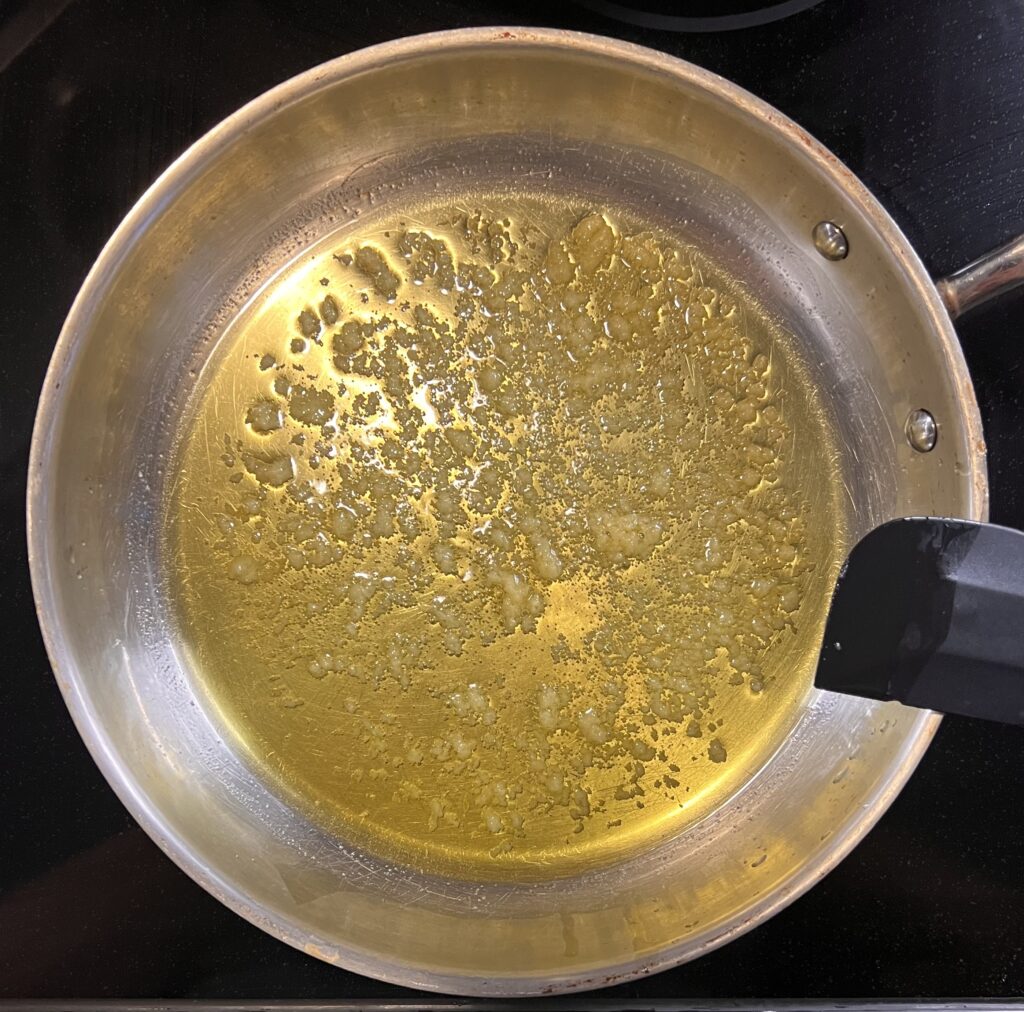
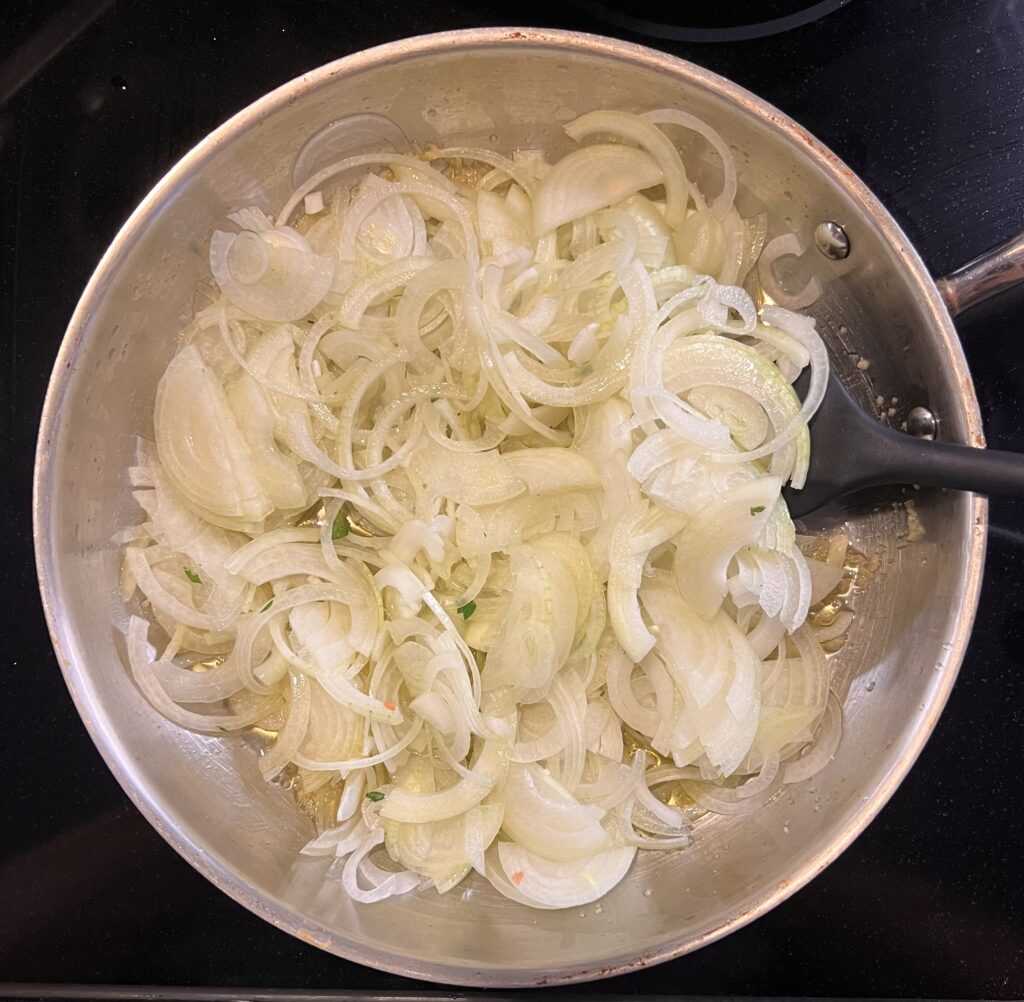
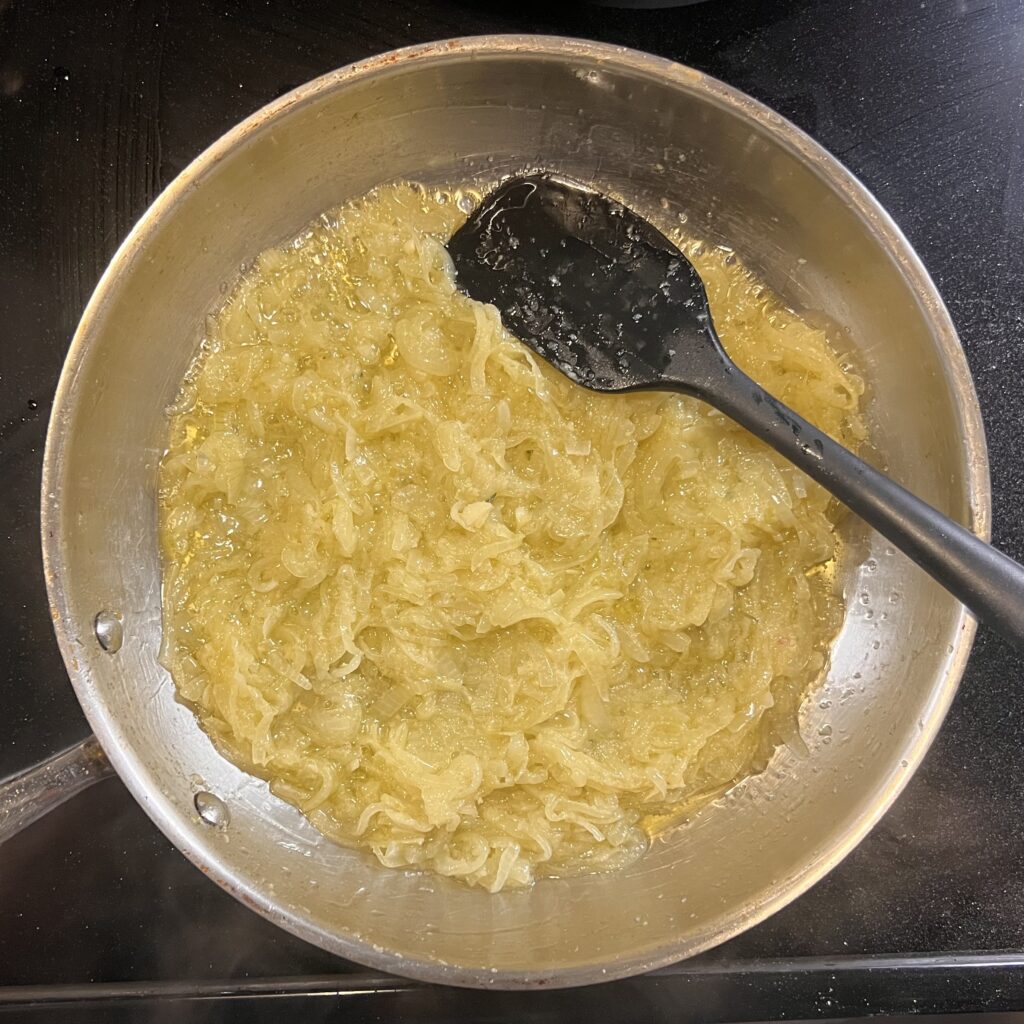
- In a pan set over medium low heat, heat your oil until shimmering, about 5 minutes. Add your sliced onions and stir until all the onions are coated in oil. Let the onions sauteé slowly, stirring occasionally, until soft and translucent and ever so slightly just starting to turn brown, about 15 – 20 minutes.
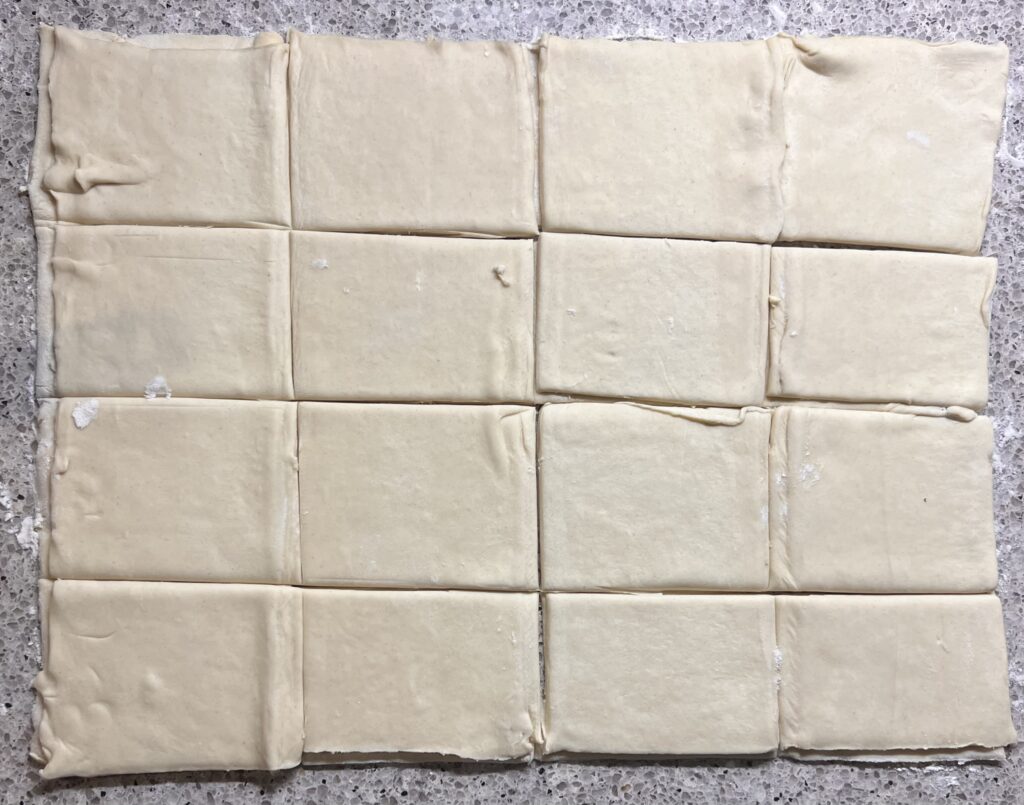
- While the onions are cooking, prepare the puff pastry. Unroll both sheets and layer them one on top of the other (dust the top of the bottom sheet with some extra flour if you think they may stick) and cut them to your desired pastry sizes (for a standard sheet I usually do three equal cuts along each side to end up with 16 pasties). Keep the cut sheets in the fridge until you’re ready to assemble the pasties.
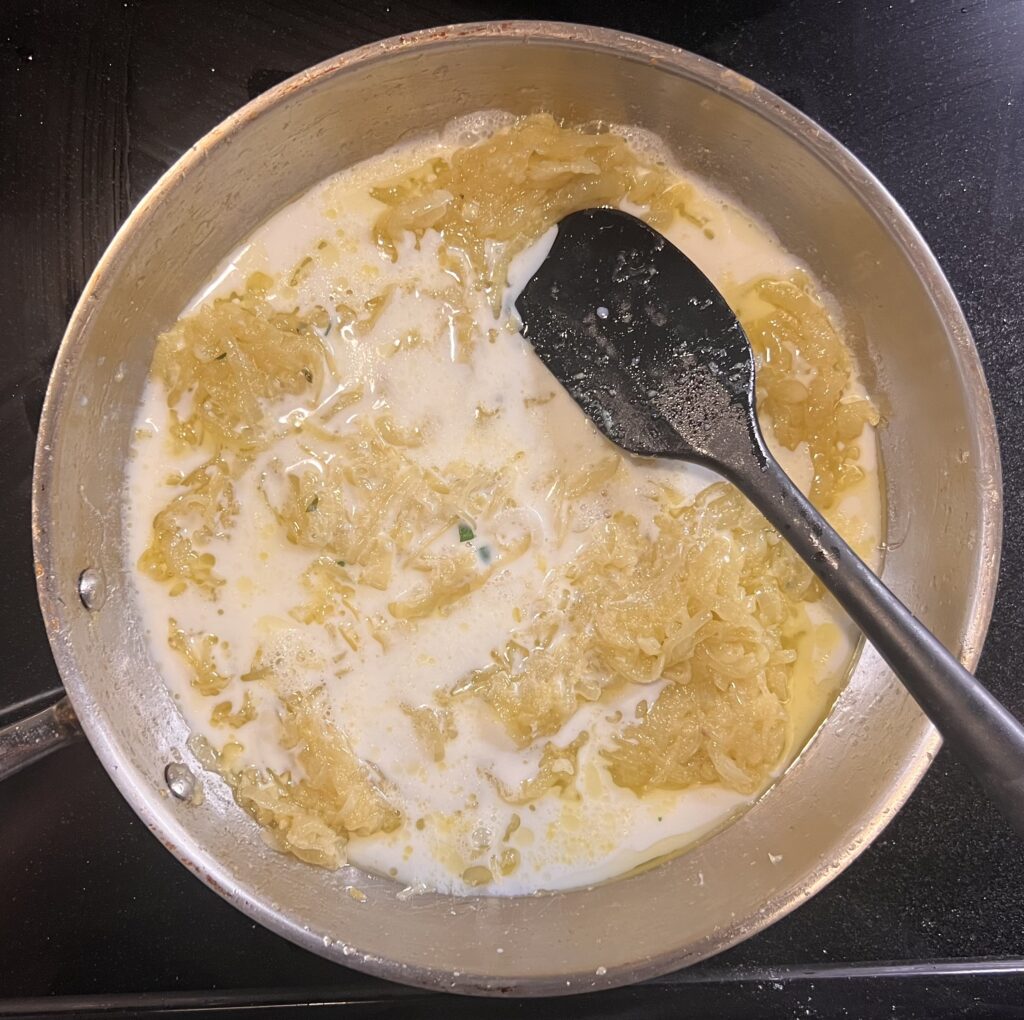
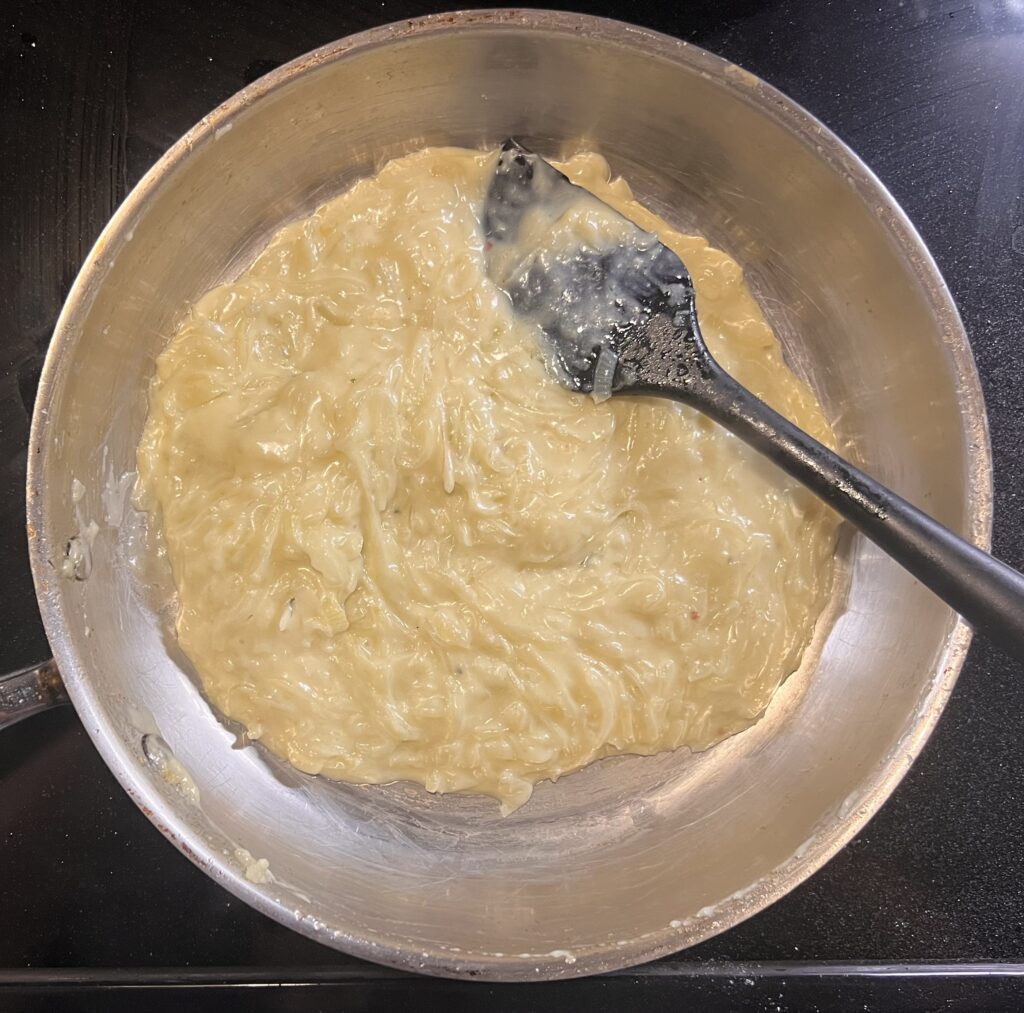
- Once the onions are cooked, sprinkle the flour over them and stir it in until there are no flour clumps remaining and the onion mixture becomes thicker. Once thick, add half the milk and incorporate thoroughly before adding the second half of the milk and mixing again to combine. The mixture should be thick and gloopy.
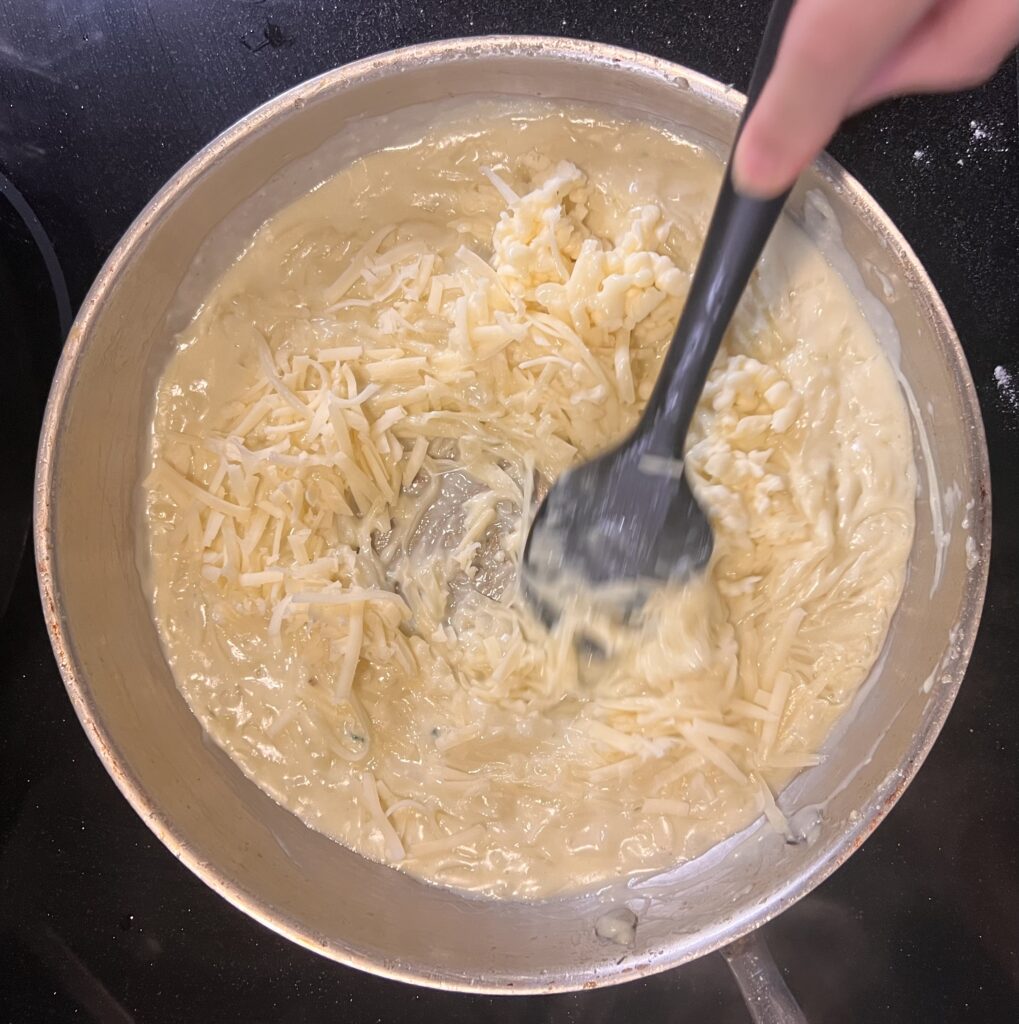
- Turn the heat to low and add a quarter cup of the cheddar and a quarter cup of the mozzarella. Stir until the cheese is fully melted into the mixture. Repeat three times until the full cup of cheddar and cup of mozzarella is incorporated. The mixture will be slightly looser after adding all the cheese, this is normal.
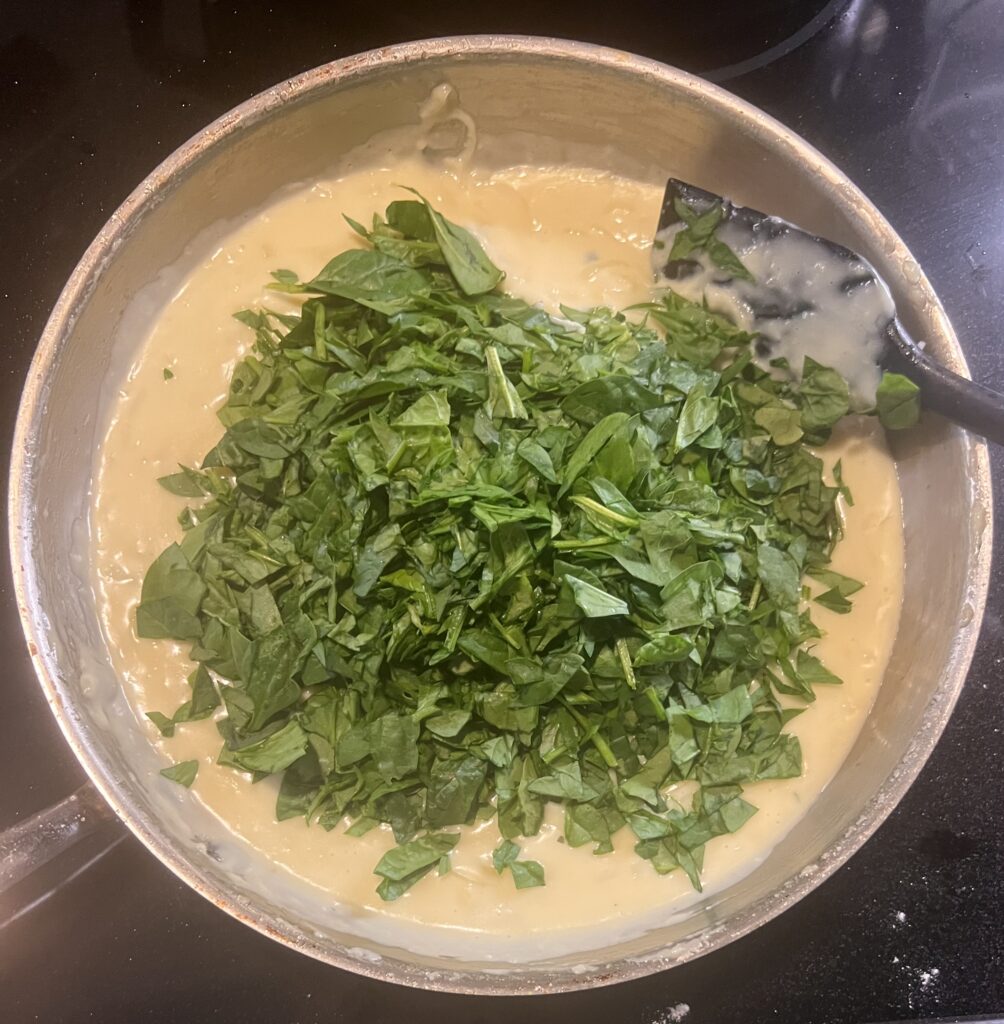
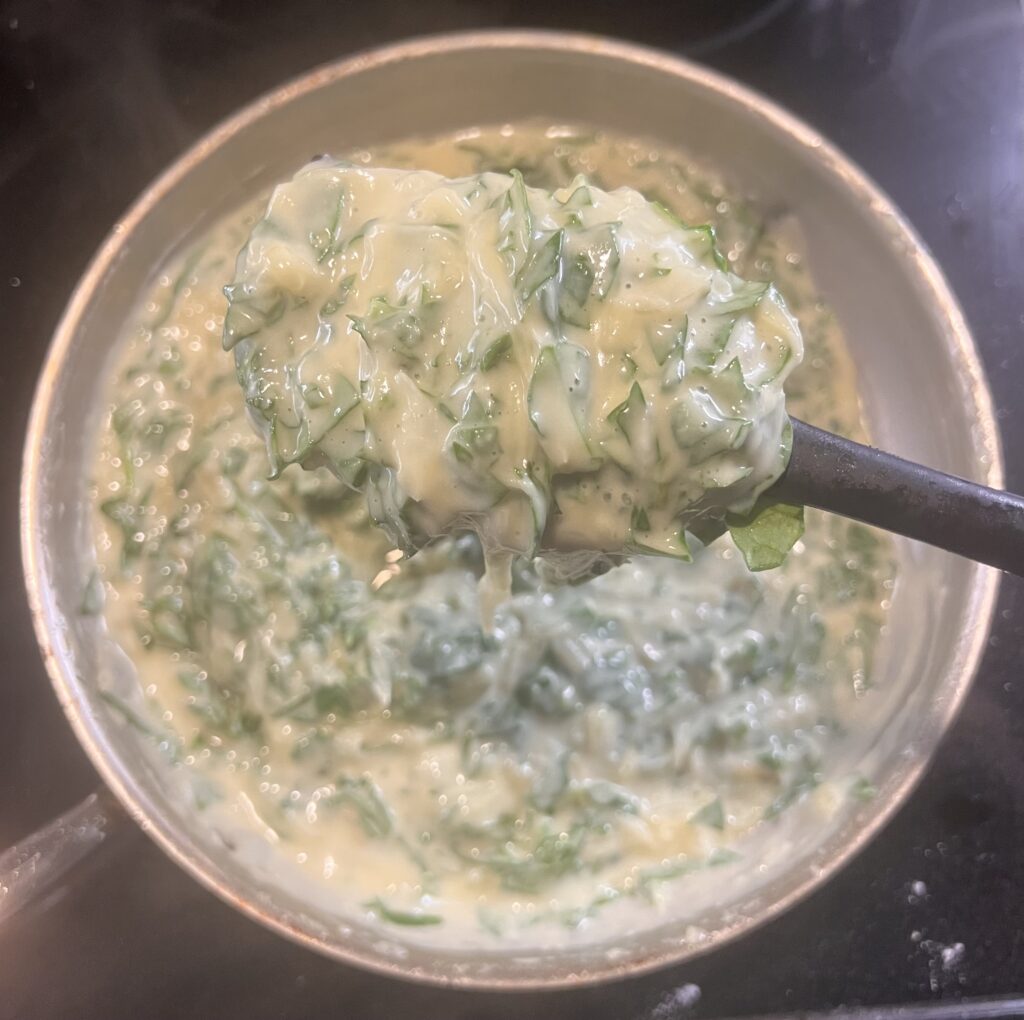
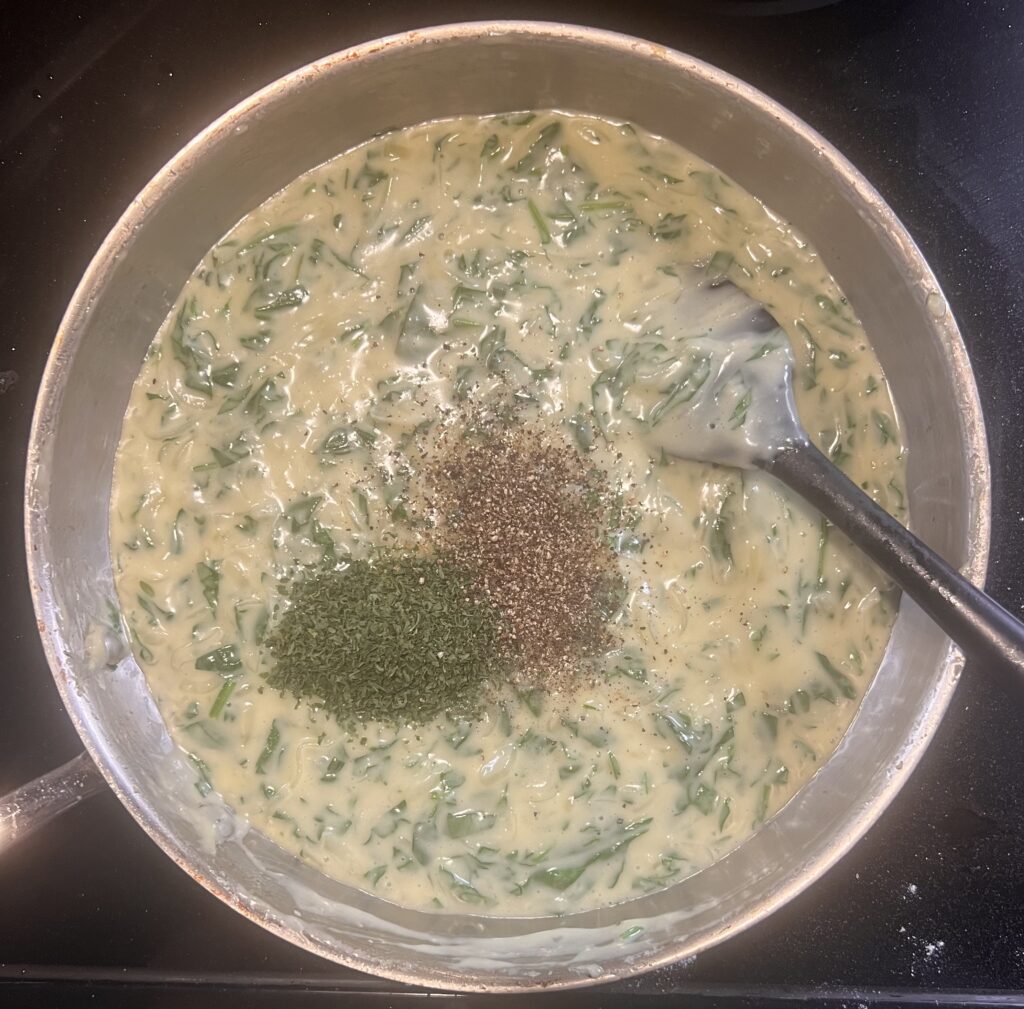
- Add the chopped spinach, pepper, and dried parsley and mix to combine. At this point you can also add salt if desired, however depending on the cheeses used you may not need it.
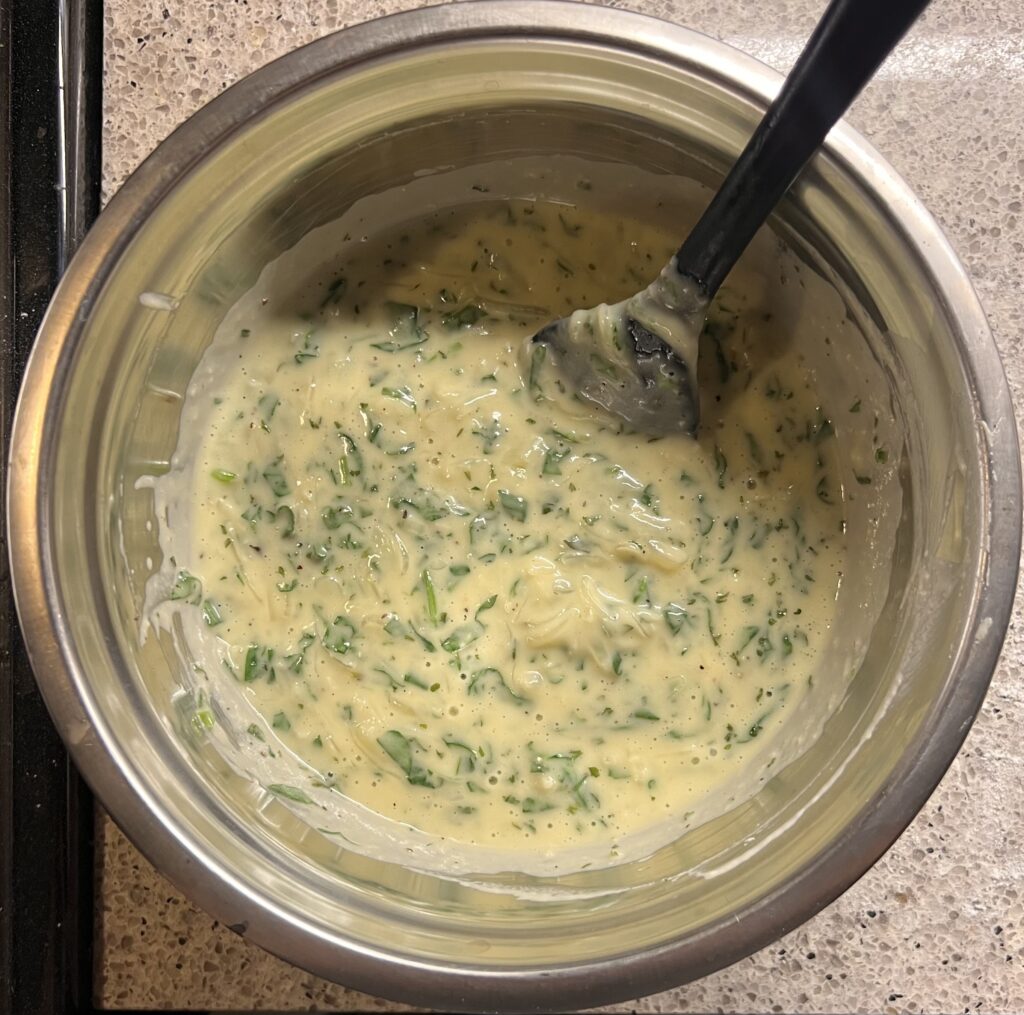
- Pour the mixture into a bowl to cool and let sit for about an hour, stirring occasionally. It should thicken enough during this time to hold its shape when scooped onto the puff pastry.
- Preheat your oven to 400 degrees celsius.
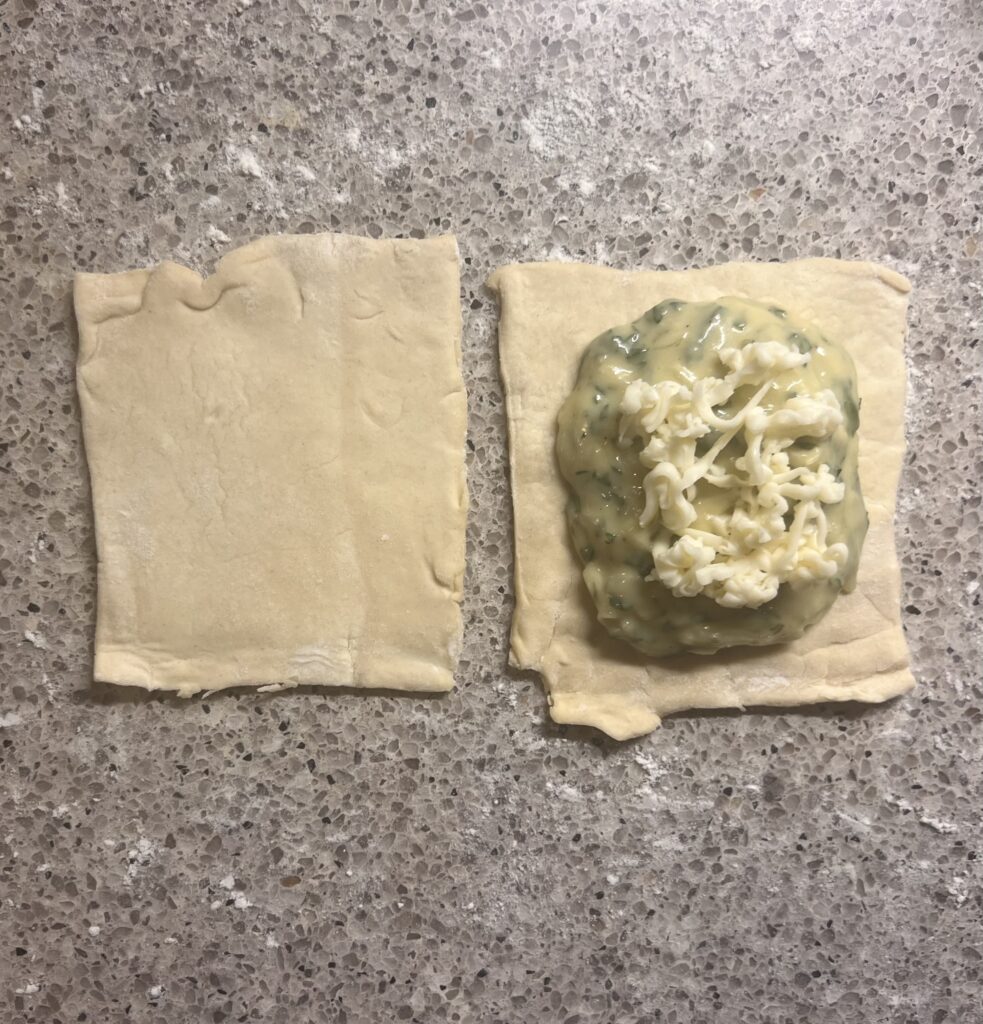
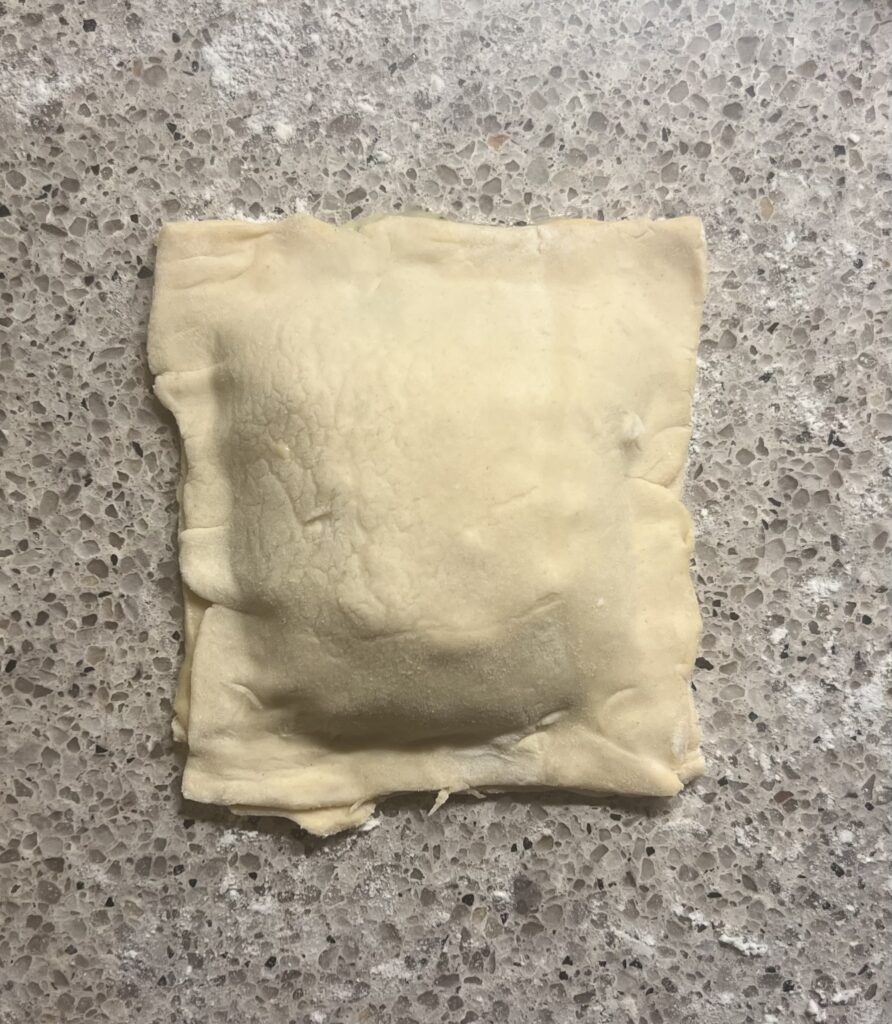
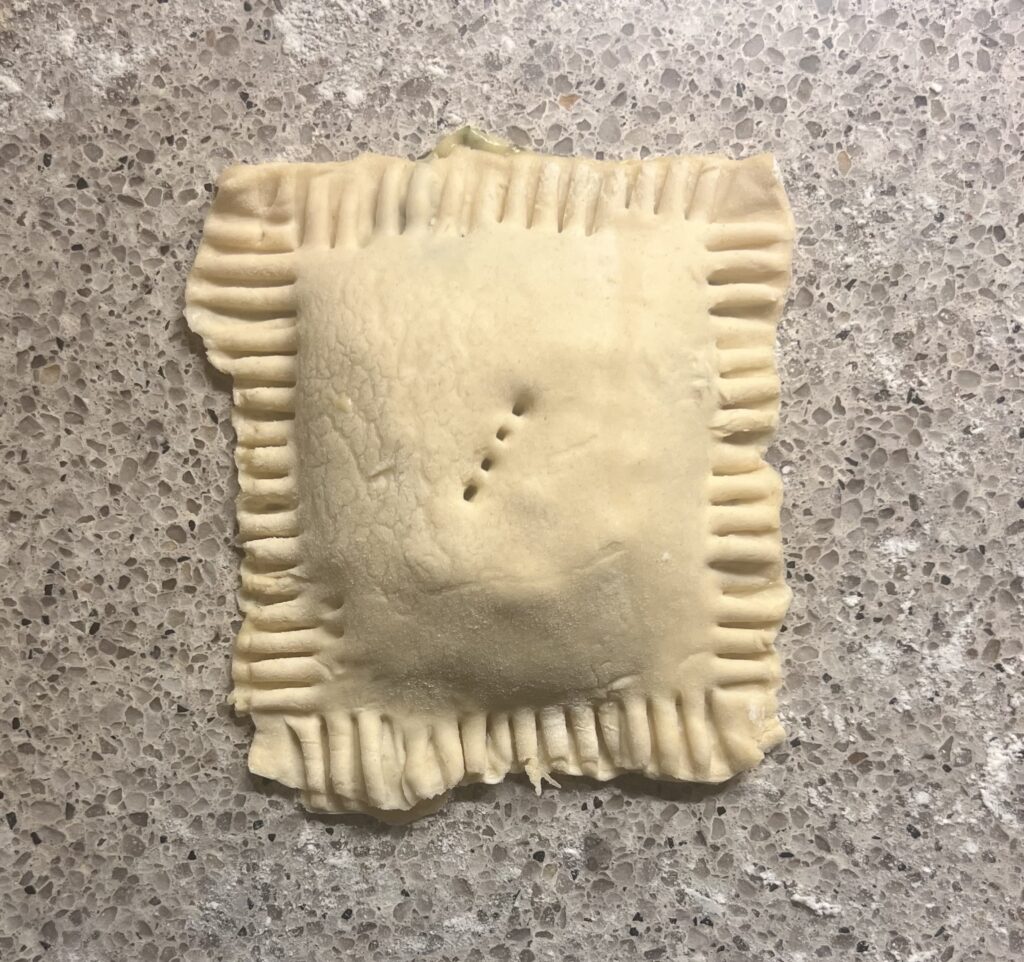
- Once sufficiently cooled, retrieve the puff pastry from the fridge and sprinkle some flour across your workspace. Take a sheet of pastry and place it down on the floured surface. Take a spoonful of the mixture and place it in the center of the pastry sheet. Be sure to leave about an inch of space along each edge of the pastry. Add a small sprinkle of mozzarella atop the filling, and then take another sheet of pastry, lightly stretch it out to be slightly bigger than the pastry rectangle holding the filling, and place it on top. Using your fingers, lightly press the edges to seal the mixture in and then use a fork to go over the seal, pressing down to create a crimped effect along the edges. Use the fork to press 4 holes into the top of the pasty, being careful to not pierce the bottom layer of pastry.
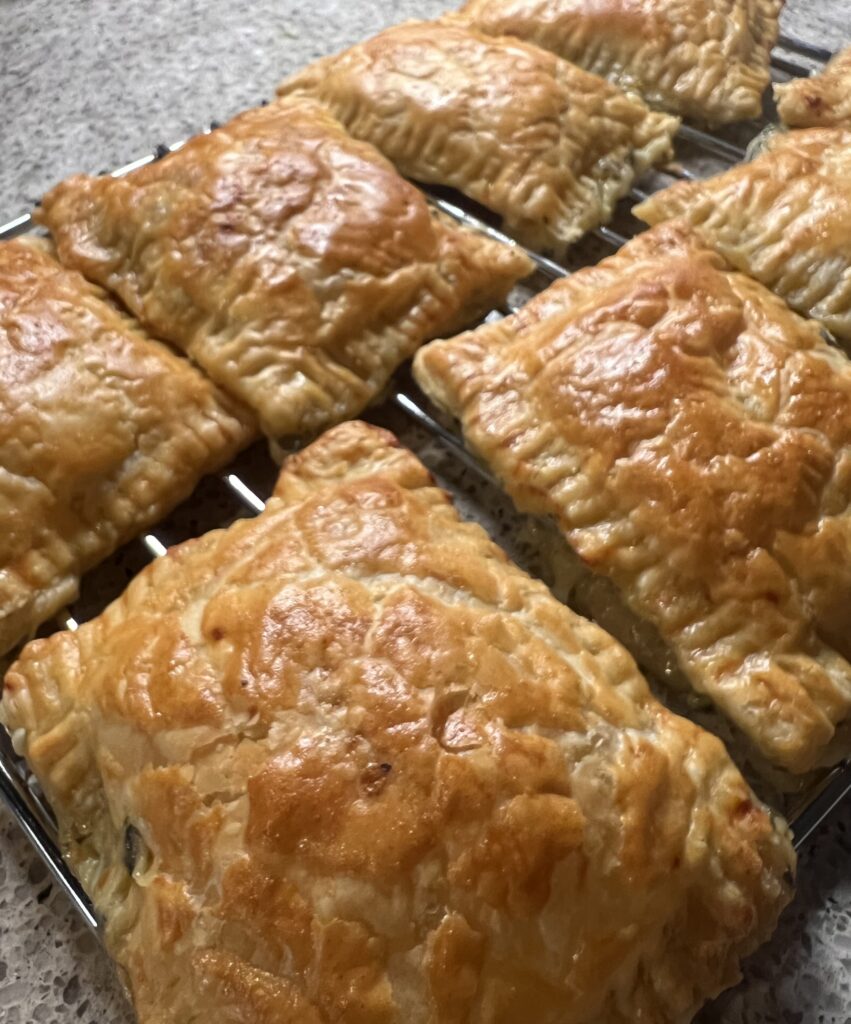
- Transfer the finished pasties to a baking tray and brush each with a light layer of eggwash. Bake for about 20-25 minutes, until golden brown and puffed.
- Remove from the oven and discard any filling that has spilled out of the sides. Transfer to a cooling rack and let cool for at least 10 minutes before digging in.
Notes:
- You can use any combination of sharp cheddar + melty cheese here. Ideally Lancashire cheese is best, but any sharp white cheddar (the stronger the better) will work along with a good melting cheese like mozzarella or munster. Stay away from soft cheeses like brie or camembert, as they will be more prone to leaking out of the pasty.
- The longer you cook the onion, the sweeter the end pasty will be. Traditionally the onions are not cooked to a browning stage, as in this recipe, to retain some of that oniony bite, but you can cook them down further if you’re after more of a french-onion-soup vibe.
- Some of the filling will inevitably leak out of the pasties during the baking process. With any liquidy mixture like this one, it’s a matter of trying to keep as much filling in as you can rather than preventing any from coming out. You can reduce the amount of leakage by not overfilling the pasties, making sure you get a good seal with the fork when assembling them, and brushing a little eggwash along the edges of the pasties in addition to brushing the tops.
- You can omit the spinach from this recipe for a more traditional pie! I personally like to have a bit of green in mine, but if the ideal is truly sacreligious to you then by all means dump the spinach and enjoy the pasties as God intended.
xx,
girlwhocooks