When I bought my first cast-iron pan, I was equal parts terrified and excited. I had heard so much about this magical pan – non stick, stovetop and oven compatible, leeches iron into your food. Basically every anemic aspiring chef’s (a.k.a me) dream. So imagine my surprise when I painstakingly seasoned my new purchase to perfection, oiling and heating the pan again and again, not letting a drop of water getting near it only for my inaugural cast iron fried eggs to stick.
I was heartbroken, but determined, so I scrubbed away, re-seasoned, and got cracking once again. And after learning a few more lessons, like to not scrub away the seasoning I’d developed with every wash, and letting the pan heat adequately before dropping anything in, I felt like I had finally mastered the cast iron. I had even brought it back from the brink of death after my sister put it in the dishwasher and it emerged a shade of bright, rusty orange, (although our relationship remained on life support for the few weeks following that incident).
A well-loved cast iron pan is your kitchen’s strongest workhorse. They’re able to withstand and hold a tremendous amount of heat, are the perfect vessel for transferring foods from stovetop to oven, and only get better with time and use. Each time you use a cast iron you’re adding a layer of “seasoning”, or oil, to the pan, helping to build up a non-stick surface that’s perfect for a multitude of proteins, veggies, even baked goods, and with the right care, can be passed down for generations.
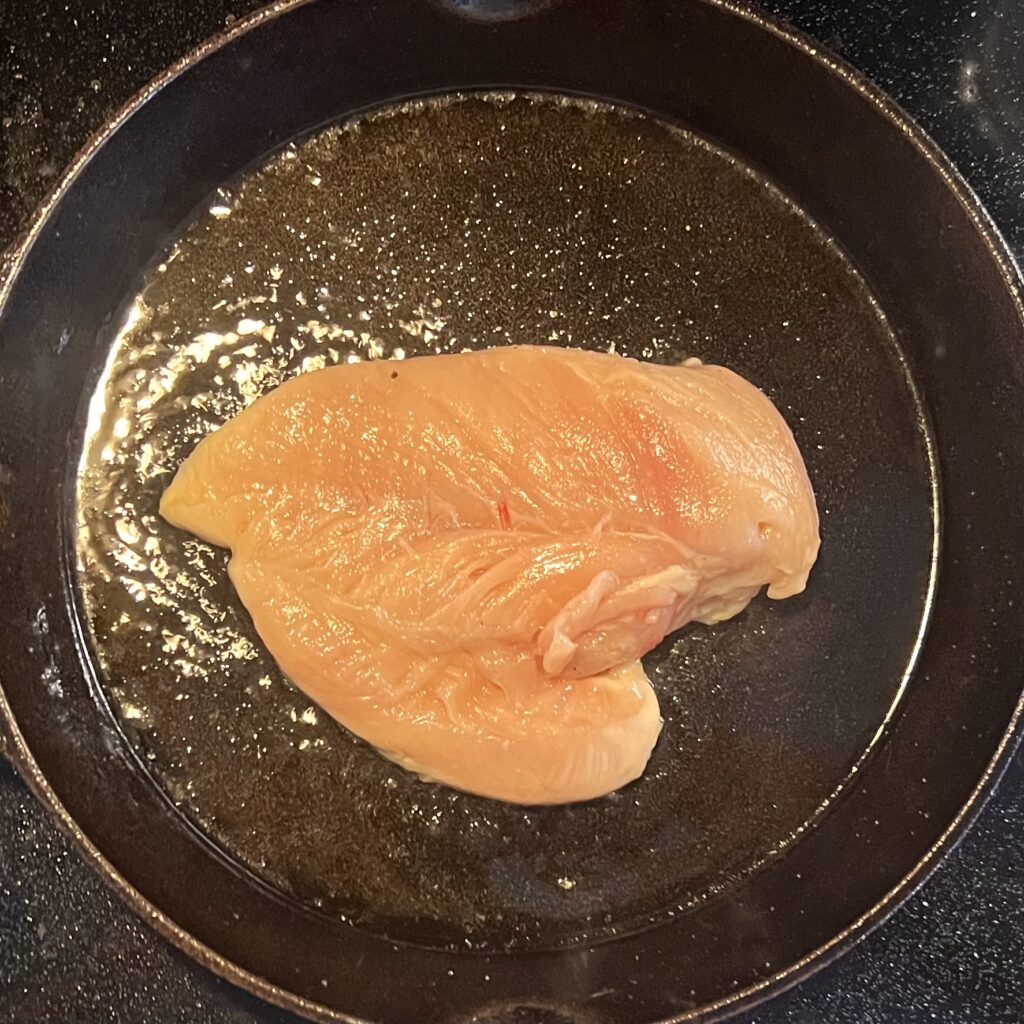
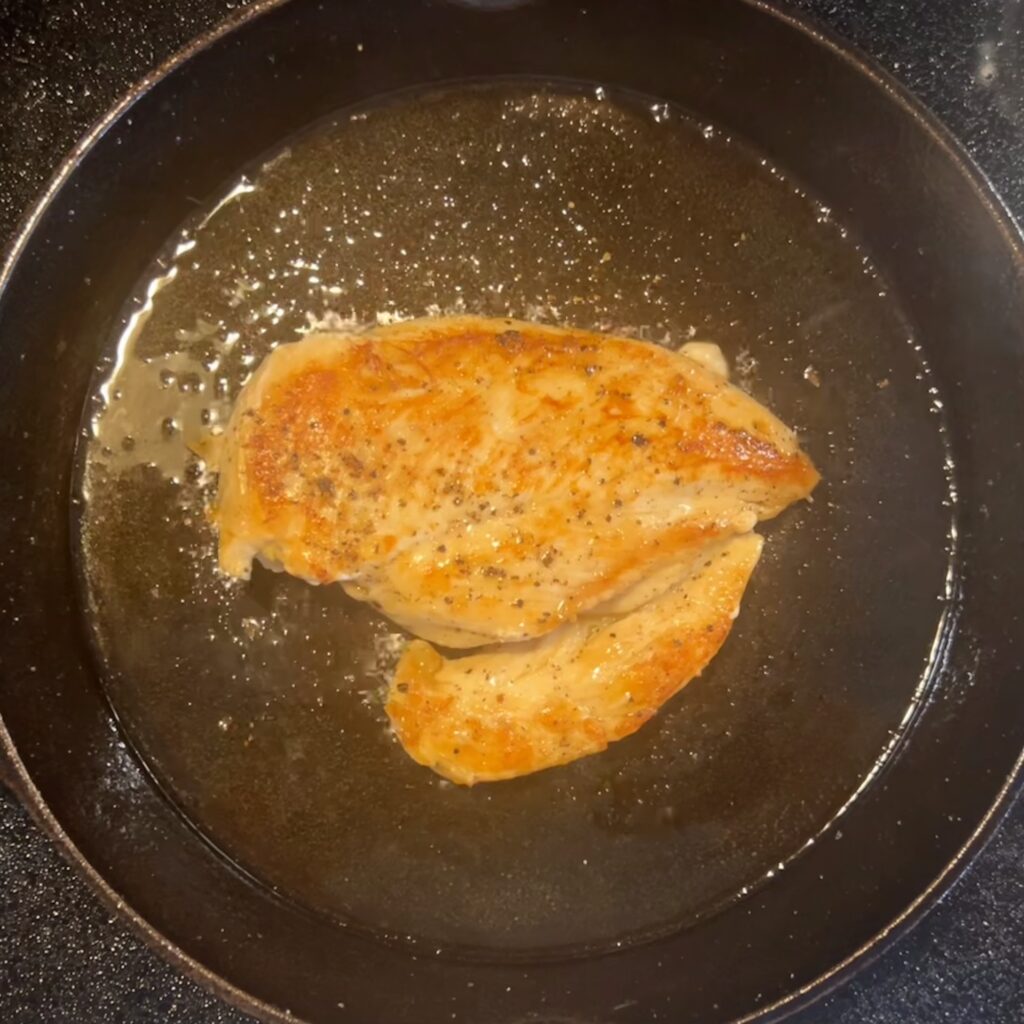
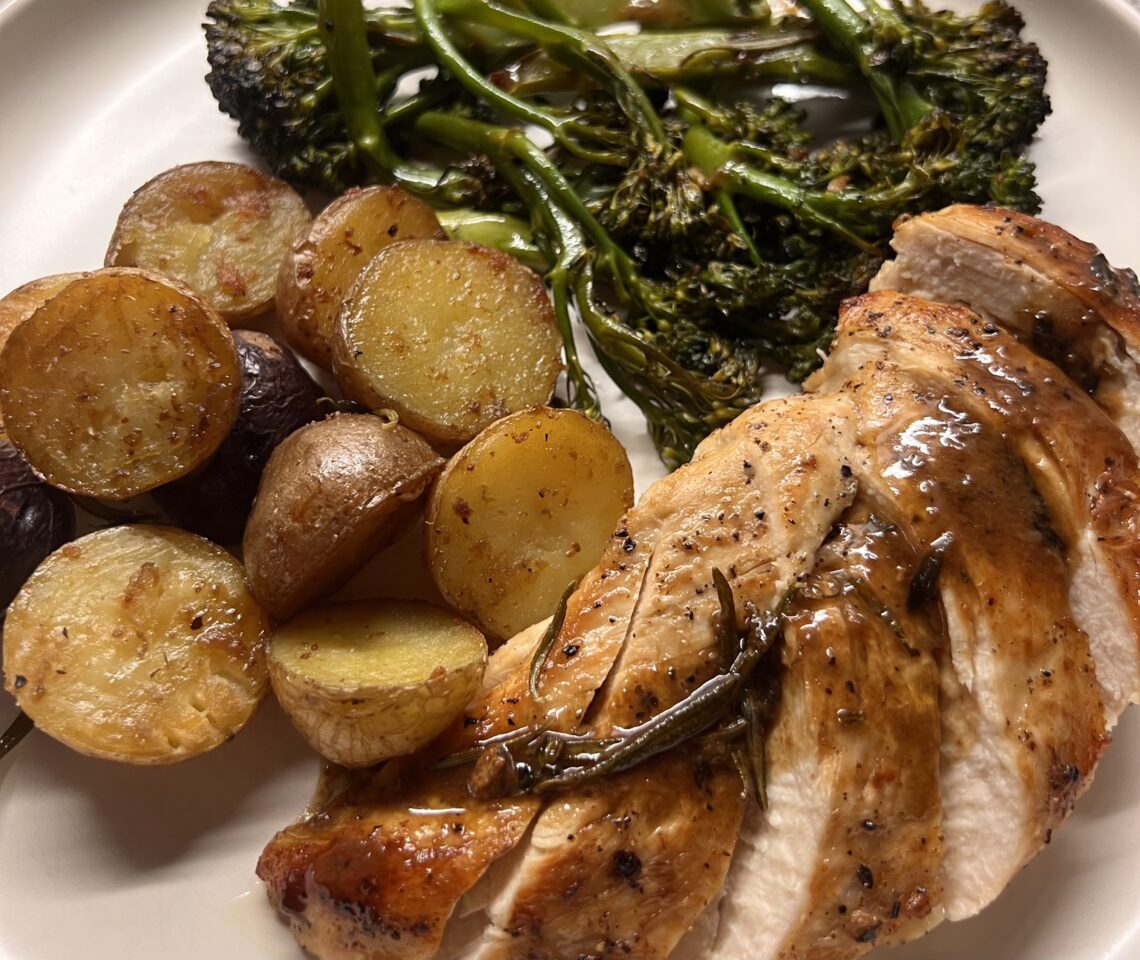
My favourite way to utilize my cast iron (aside from sunday breakfast, of course) is to cook a chicken dinner. The pan’s ability to retain heat evenly means you’re able to get a perfect, even sear on your chicken every time, and once you’ve developed a lovely crust on your chicken, you’re then left with the remaining oil and chicken juices to continue cooking your meal in.
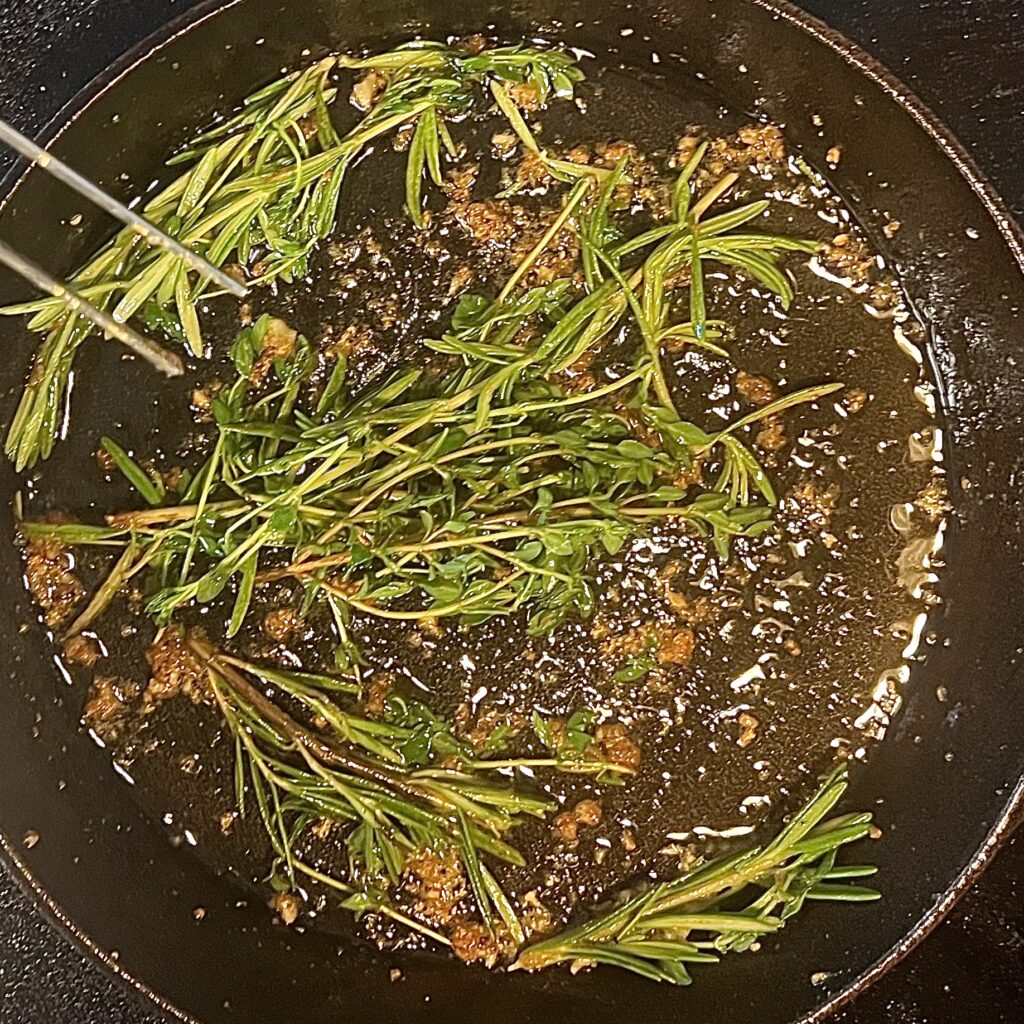
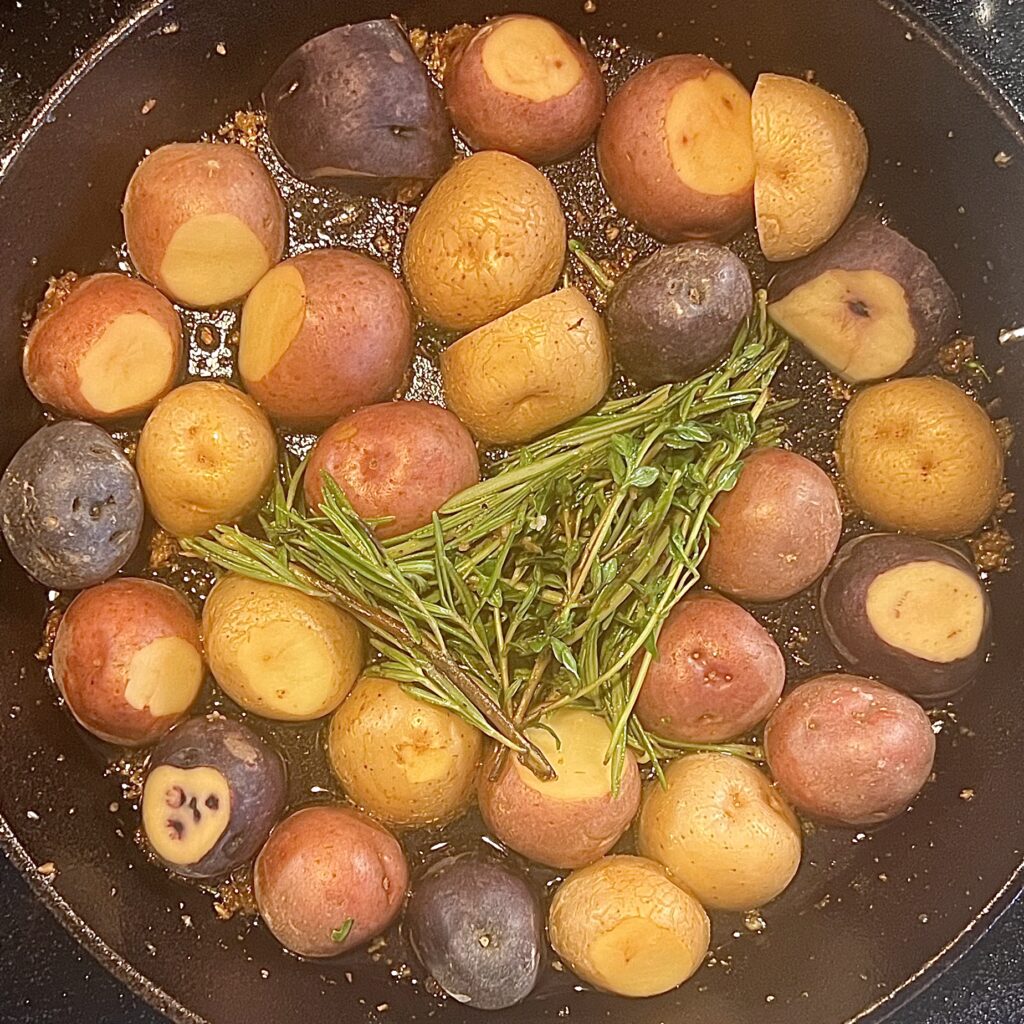
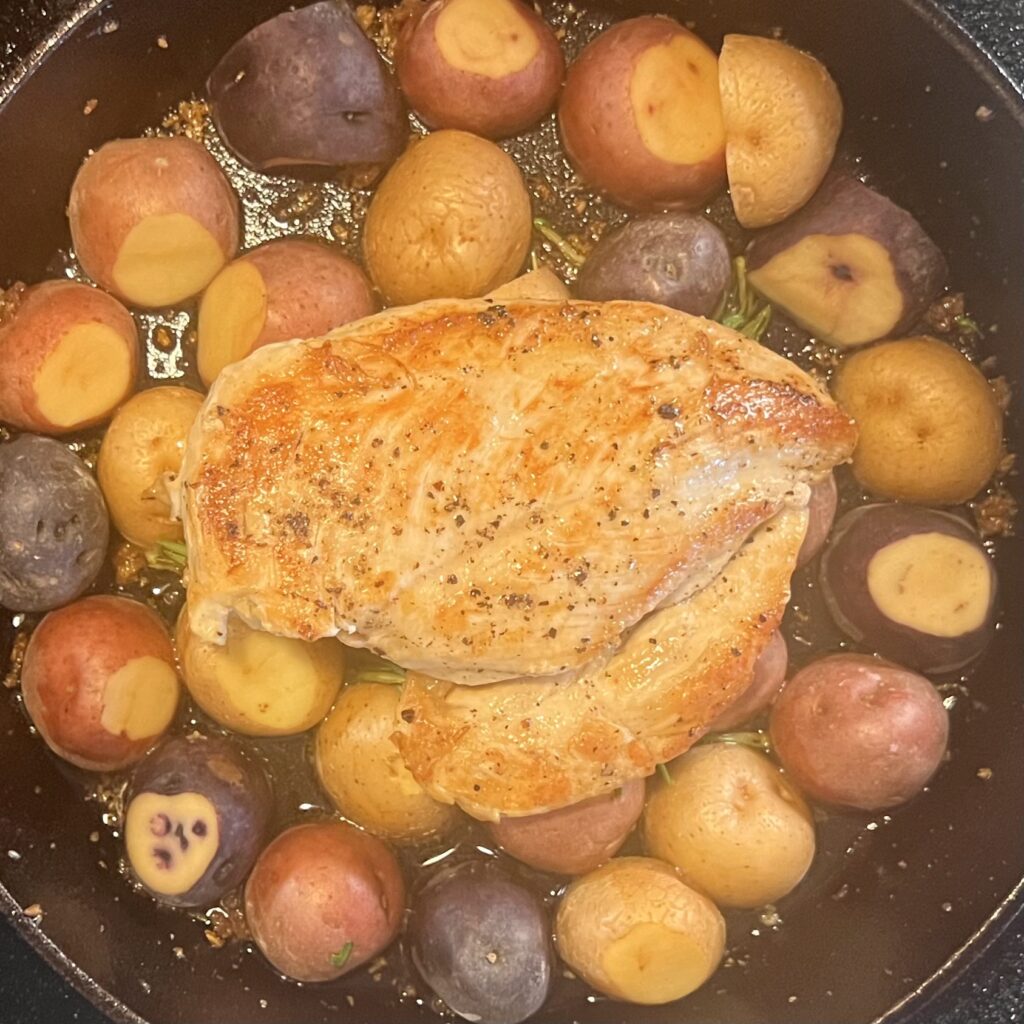
Once you’ve sauteed the garlic and herbs in the pan you’ve added another layer of flavour to infuse into the potatoes, and the golden garlic creates a perfect crust on the potatoes while the bed of herbs is the perfect for leeching flavour into the chicken as it finishes in the oven.
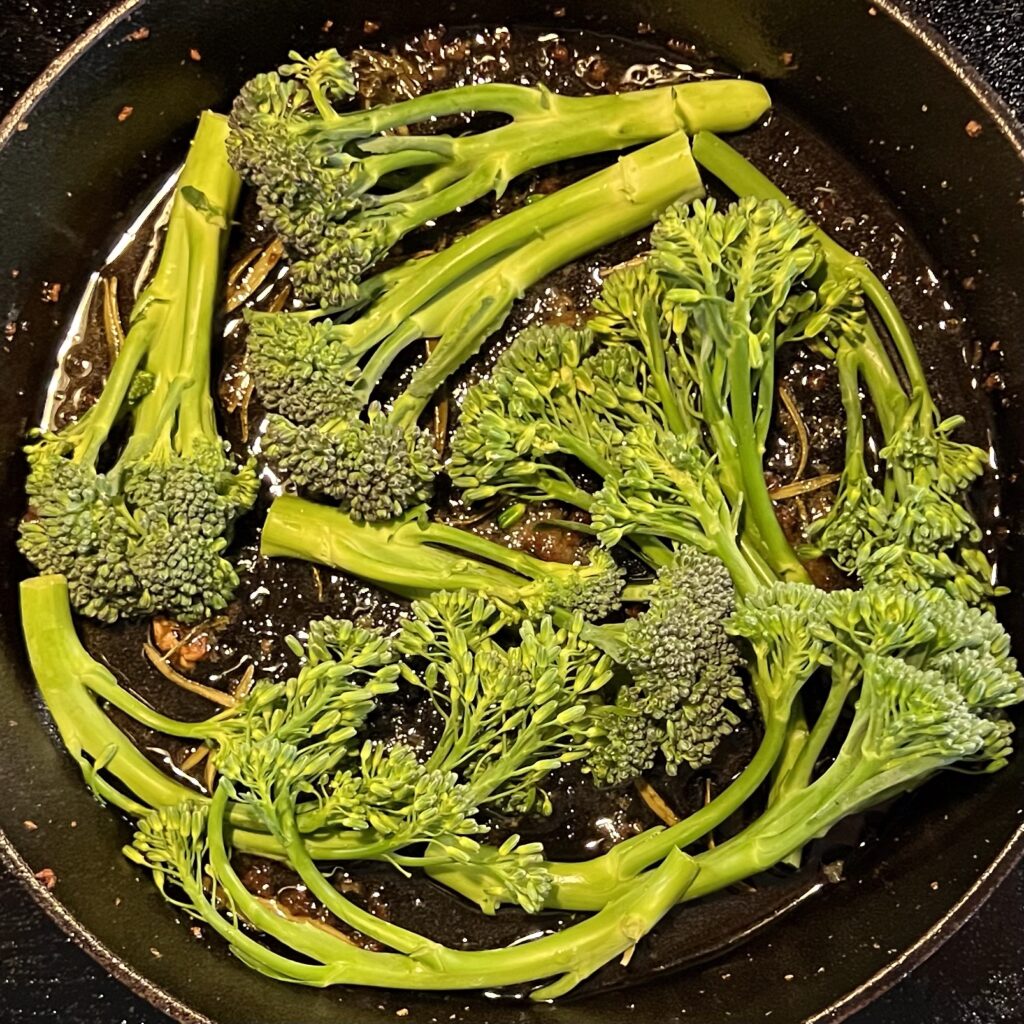
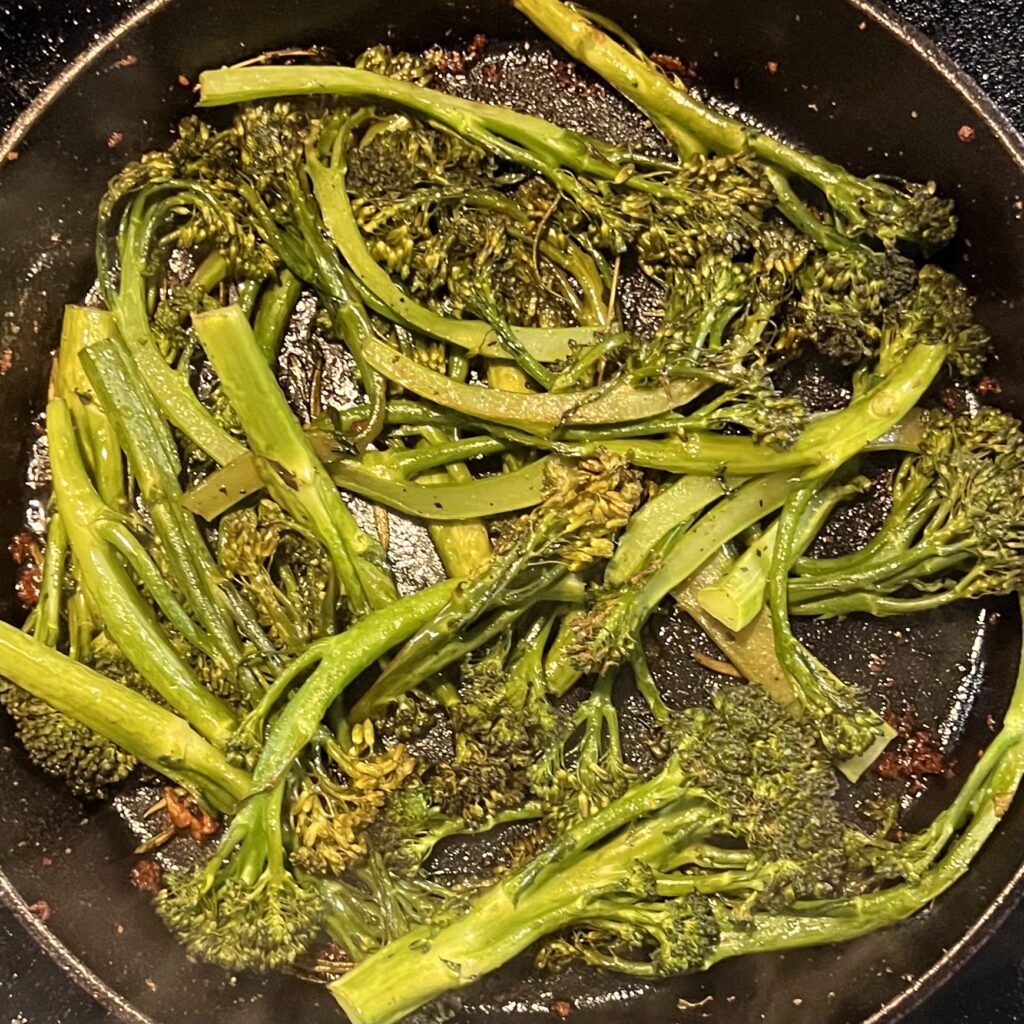
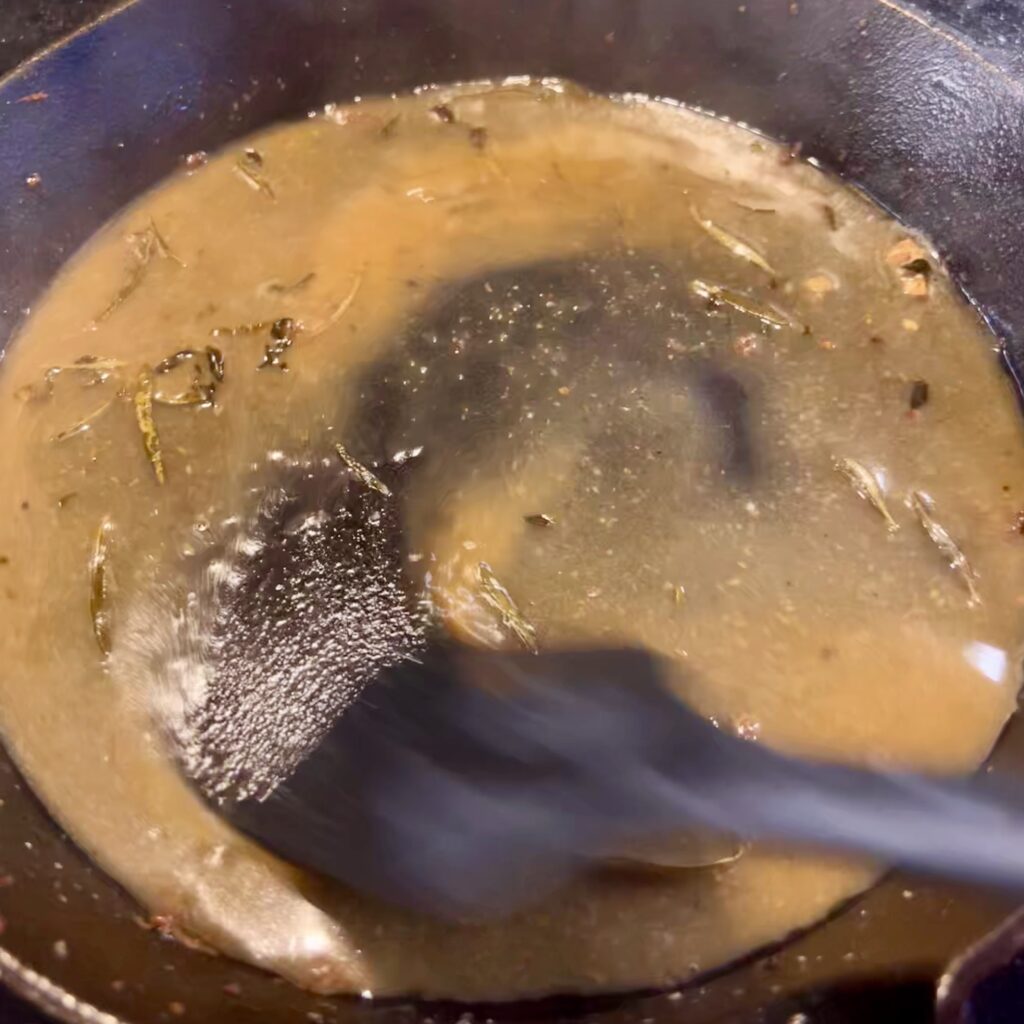
This entire meal is cooked in just a single pan, building on the flavours left behind from each addition until you’re left with a rich, garlicky, herby pan sauce that will leave you licking the plate (and possibly the pan) clean.
Ingredients:
4 tbsp of olive oil
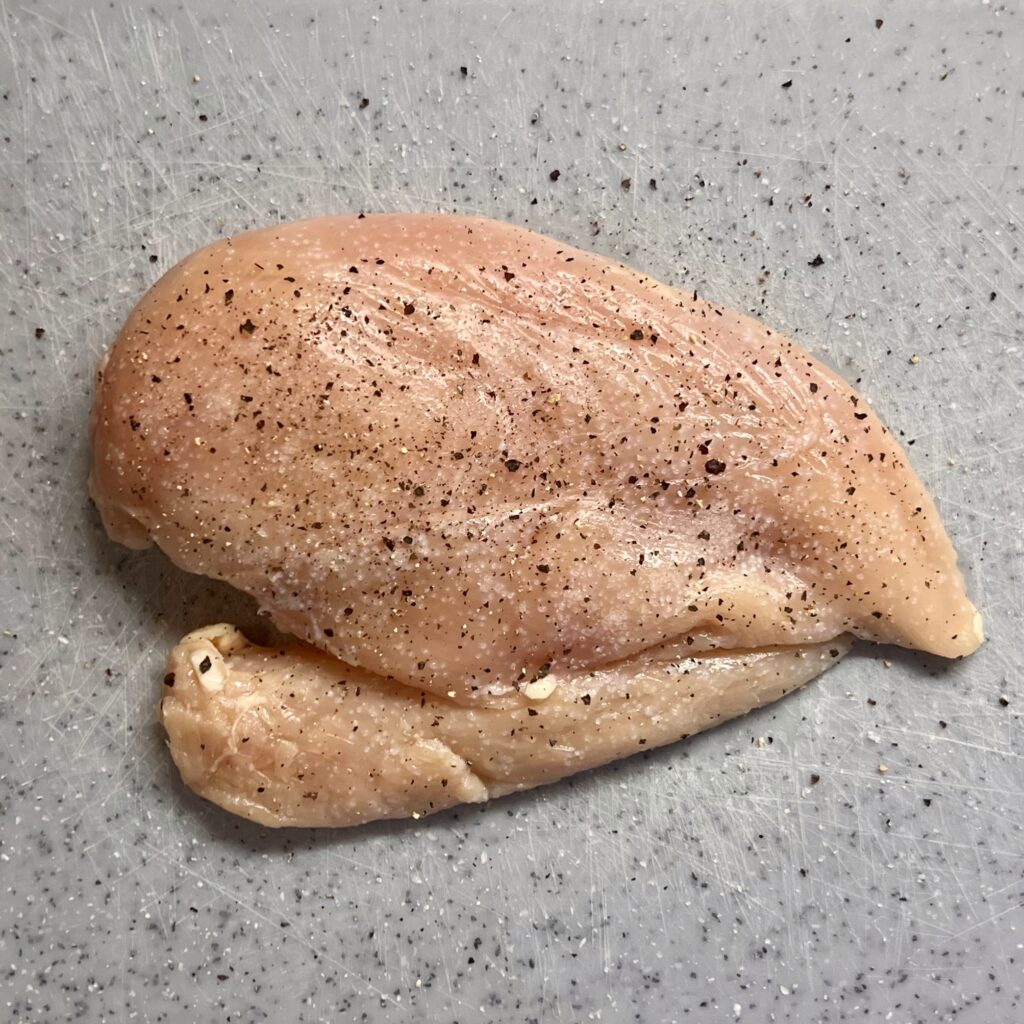
1 skinless, boneless chicken breast
1 1/2 cups of white vinegar
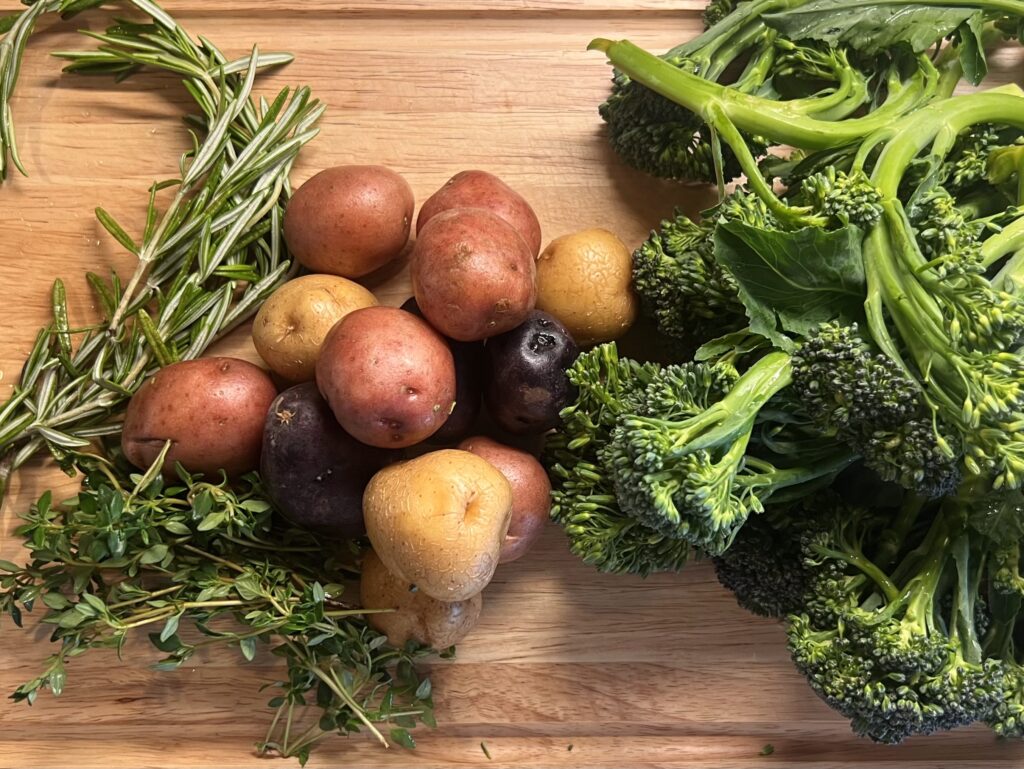
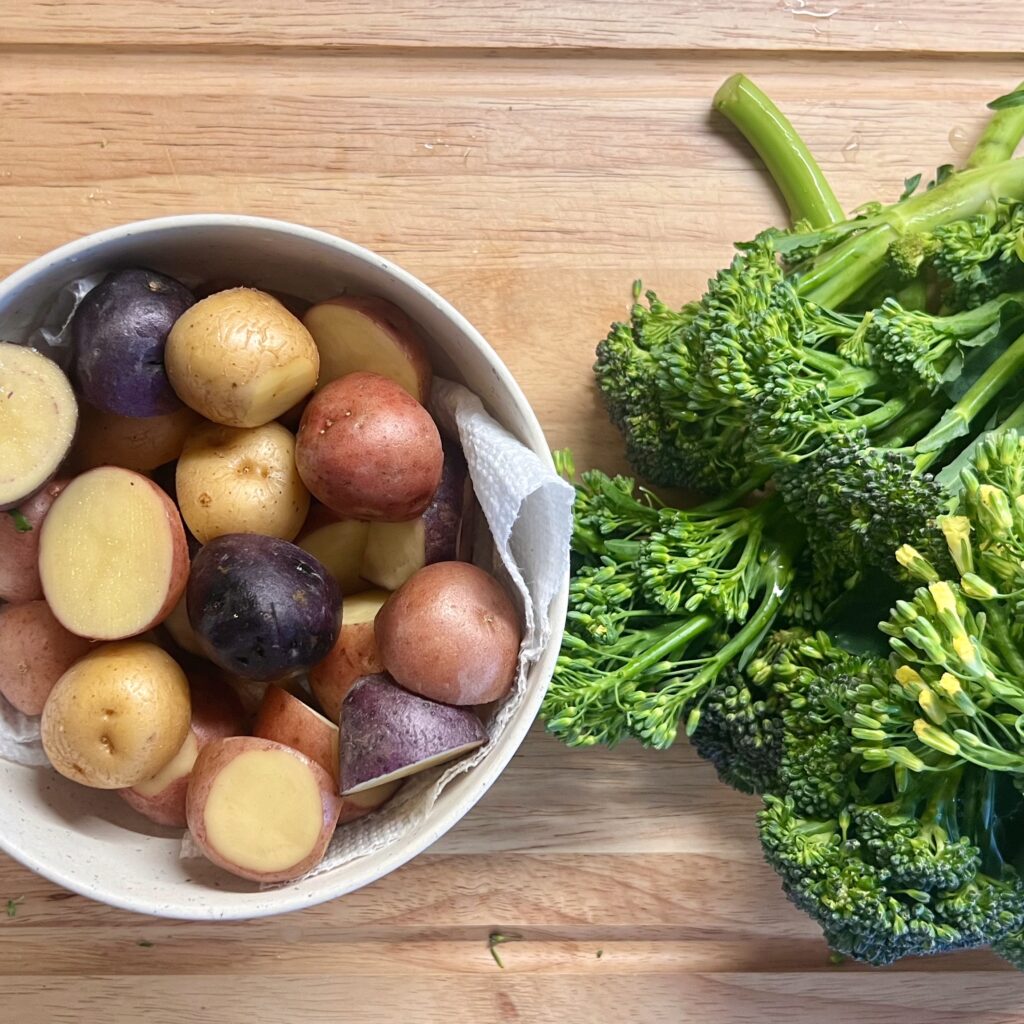
2 cups baby potatoes, halved
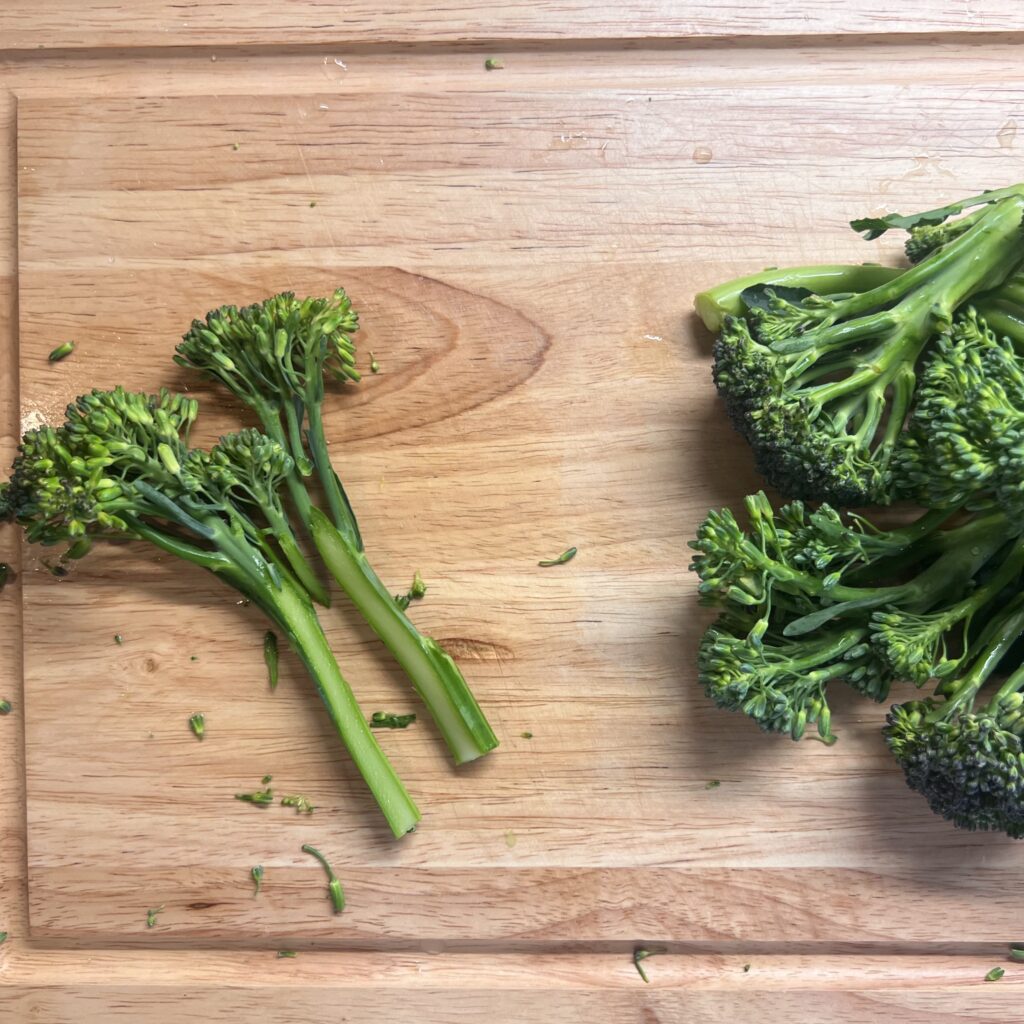
1 bunch broccolini, washed and sliced in half lengthwise
Small bundle of fresh rosemary
Small bundle fresh thyme
4-5 cloves of garlic, finely minced
1/2 lemon, juiced
1 cup water or broth
2 tbsp butter
Salt to taste
Pepper to taste
Method:
- Preheat the oven to 400 degrees.
- Soak your chicken in vinegar for a minimum of 5 minutes or up to 30 minutes. Remove from brine and pat dry before liberally seasoning with salt and pepper on the top side of the chicken.
- In a pre-heated cast iron pan set over a medium high heat, add about 2 tbsp of oil (enough to coat the bottom of the pan) until shimmering. Carefully lower the chicken, seasoned side down in the pan and leave undisturbed for about 5-8 minutes until a golden crust forms. As the chicken cooks, season the underside of the chicken.
- Once the chicken has developed a crust, flip and cook the underside for another 5 minutes.
- Remove the chicken and set aside. Lower the heat to medium low and add another tbsp of oil along with the garlic, rosemary and thyme. Saute for 2-3 minutes until the garlic and herbs are very fragrant.
- Pile the herbs in the center of the pan and place the potatoes cut side down in the pan, circling the herbs. Turn the heat up to medium and let them sit for about 5 minutes to develop a nice crust before adding the chicken on top of the bed of herbs in the center of the pan.
- Drizzle the remaining oil, salt and pepper onto the top of the potatoes and place the pan in the oven for about 20-25 minutes, until the internal temp of the chicken reads 165 degrees.
- Once the chicken is cooked through and the potatoes are fork tender, remove them from the pan and set to the side. Pile the wilted herbs on top of the chicken while it’s resting to continue to infuse the flavours.
- Return the pan to a medium heat and let the remaining oil in the pan come to a shimmer. While the oil is heating, increase the oven temperature to 450 degrees. Once the oil is nice and hot, add your broccolini to the pan cut side down and season with salt and pepper.
- Return the pan to the oven and cook for about 5-8 minutes. Once the broccolini has some colour on the bottom and is a nice, vibrant green, remove from the pan.
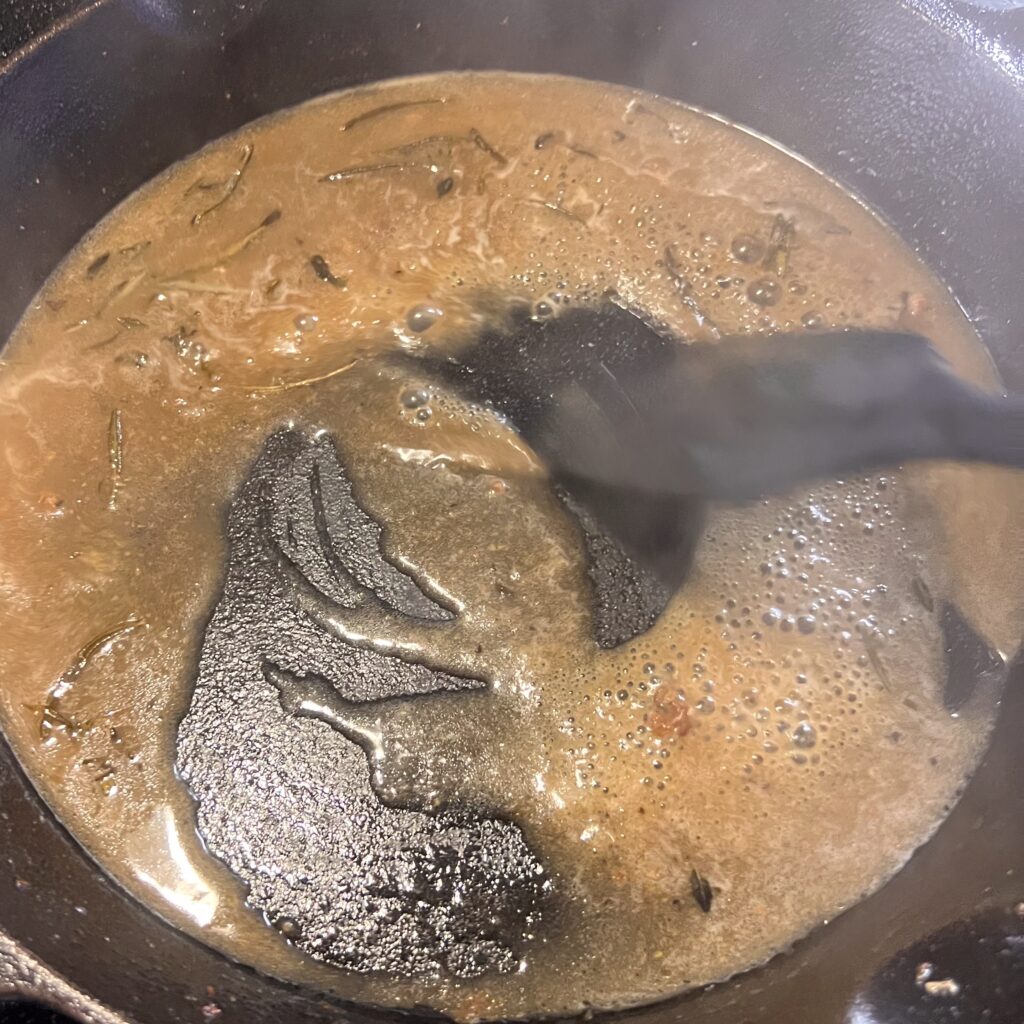
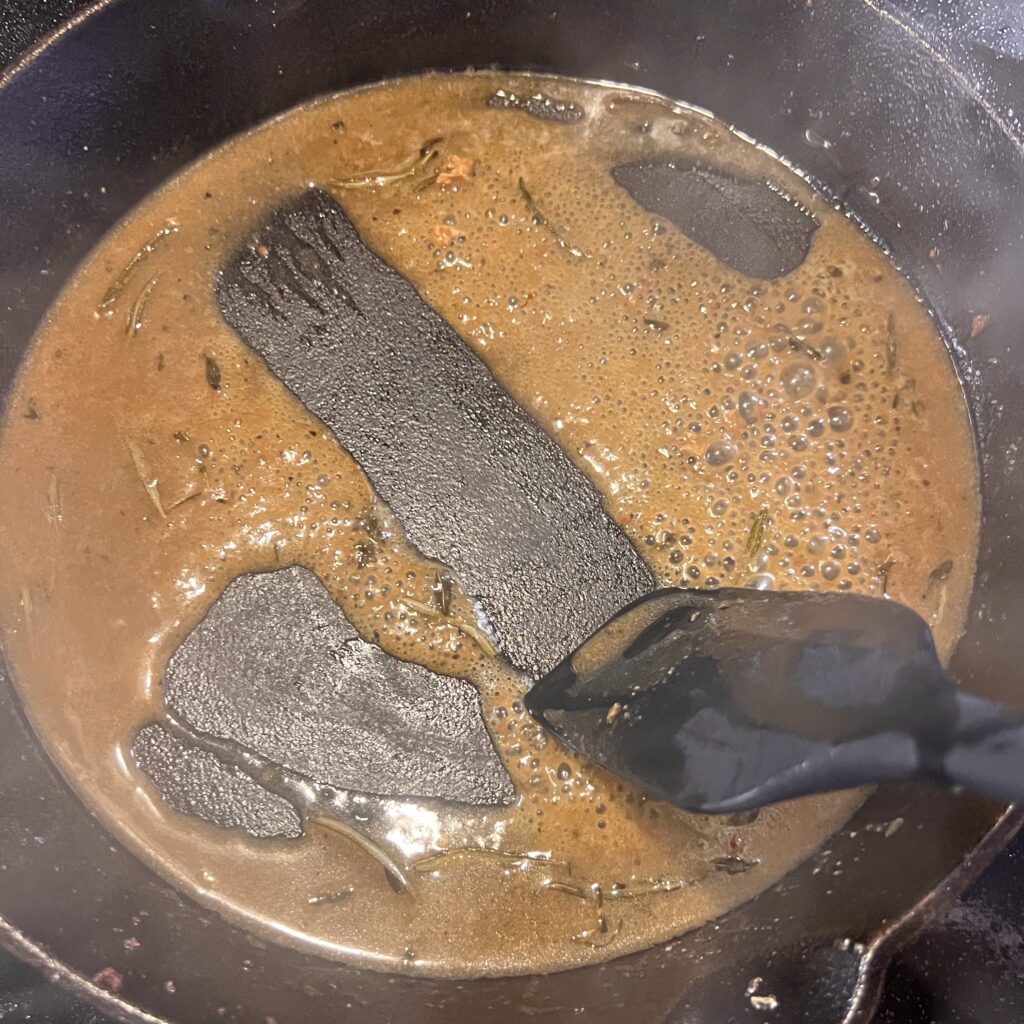
- Return the pan to medium heat and add the water/broth and butter. Stir continuously until the sauce thickens and becomes glossy. Add the lemon juice and give it a final stir.
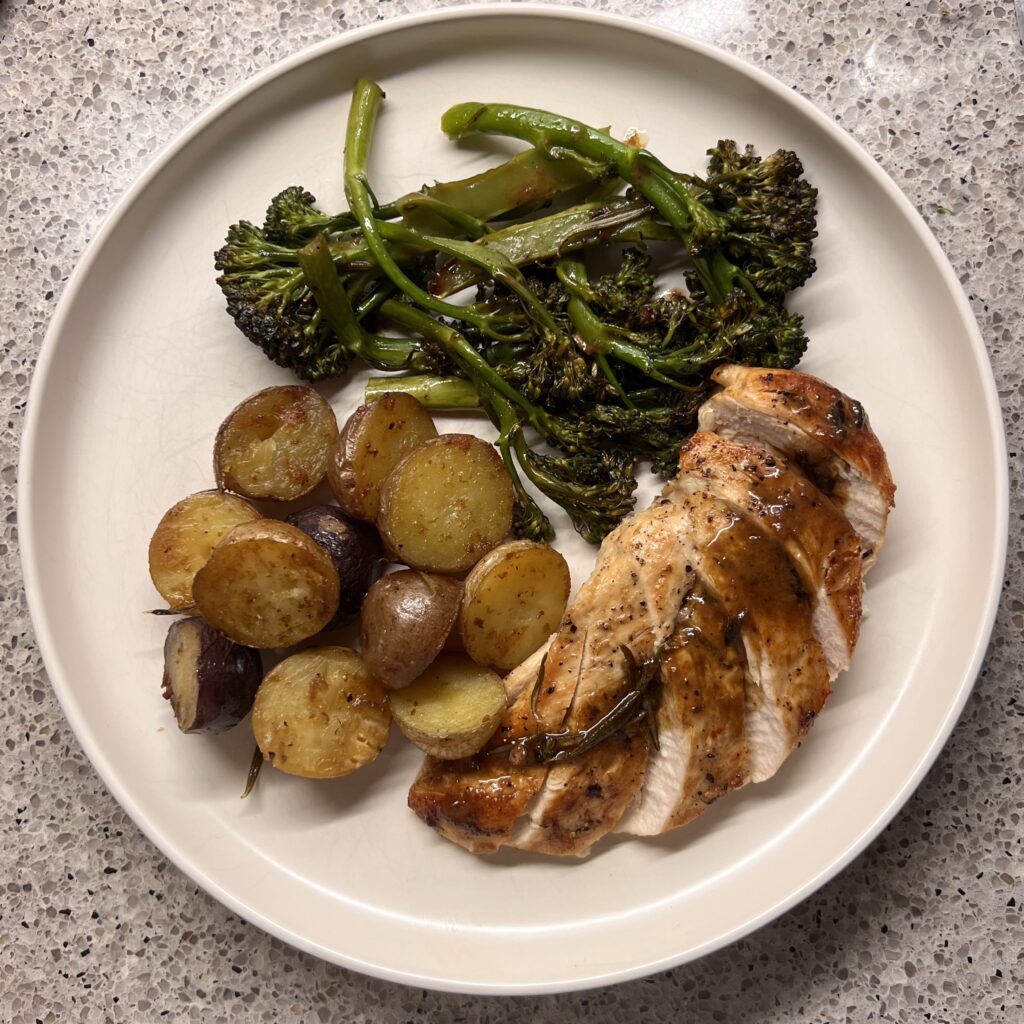
- To serve, slice the chicken at an angle and top the chicken and sides with the rich pan sauce.
Notes:
- The cook time of the chicken will depend on the size of the breast. For a smaller breast, check the temperature after 15 minutes to ensure you don’t overcook it, resulting in a dry chicken.
- You can sub the chicken breast with chicken thighs if you prefer. If using thighs with the skin on, sear at a higher temperature to ensure the fat is rendered properly and check the temperature of the chicken after 15 minutes in the oven.
- Broccolini can be substituted with any other green cruciferous vegetables, like broccoli, brussel sprouts, or even cabbage.
- Be careful when handling the cast iron pan’s handle as it will heat up along with the rest of the pan. You can purchase silicone grips to cover the handle or use a kitchen towel when transferring the pan between the oven and stovetop to avoid burns.
- If you’re having issues with burning the garlic, let the pan cool off heat for about 5 minutes before returning it to a low heat and then try adding the garlic with a touch of cold oil to help regulate the temperature further.
- The pan sauce thickens faster than you think! If it over-reduces and becomes gummy, lower the heat, add more liquid and continue to stir until you reach your desired consistency.
Enjoy!
xx,
girlwhocooks